|
||||||||||||||
|
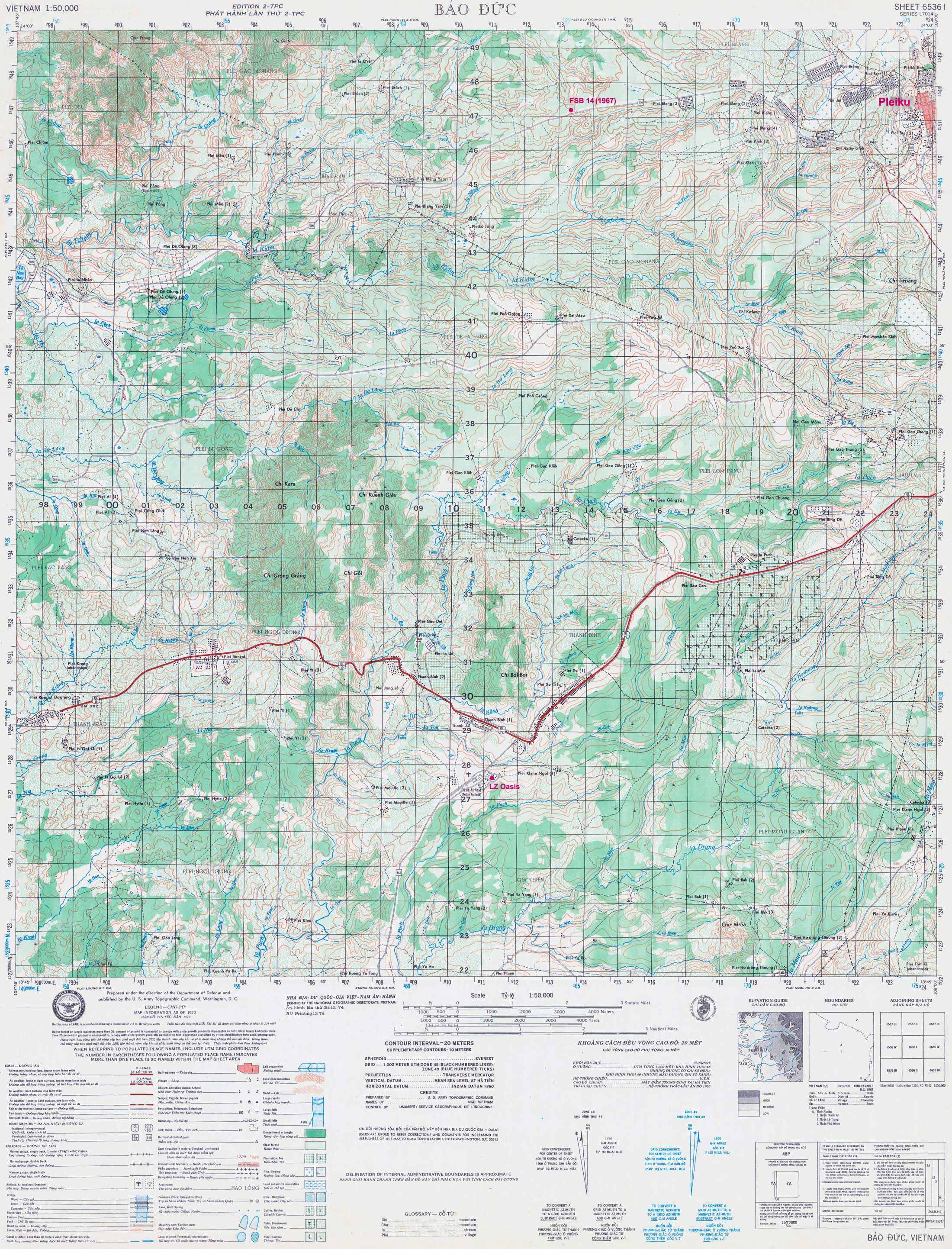
||||||||||||||





| We will add information as it becomes available. | ||
JANUARY 1967
1 January (Sunday): The battalion begins the New Year with Lieutenant Colonel James R. Lay as its battalion commander; Major Barney K. Neal, Jr. as the executive officer; First Lieutenant Eugene W. Echols Jr. as the S-1; First Lieutenant Michael C. Downs as the S-2; Captain Paul E. Freeman as the S-3; and First Lieutenant Louis A.K. Sylvester as the S-4. Headquarters & Headquarters Company is commanded by Captain Edward D. Northrop; Alpha Company by First Lieutenant Brendan T. Quann; Bravo Company by First Lieutenant Melvin E. Case; and Charlie Company by First Lieutenant James E. Bigelow II (Schneider:8). The beginning of the New Year also sees the initiation of Operation Sam Houston. The battalion is a part of Task Force 2-4 under 4ID OPORD 1-67, dated 010001Z January 1967 (Dilkes:62, Francis Marion AAR, 4ID AAR).
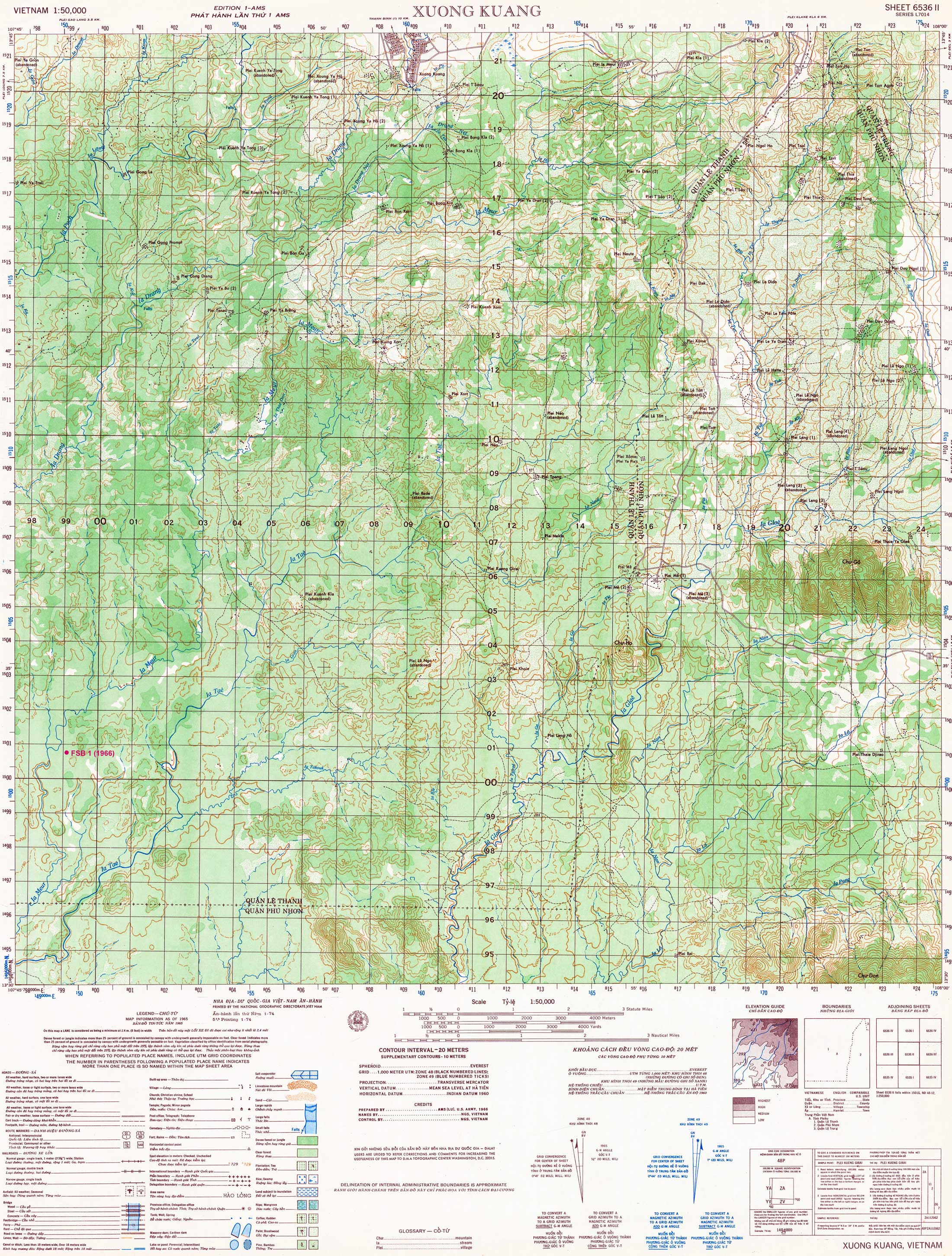
2 January (Monday): The battalion initially secures its first fire support base of the new year at coordinate YA 767495 (Map 6536-4) with Charlie Company; the command group; Bravo Battery, 4/42 Artillery; the battalion mortar platoon; five 81 mm mortars; and one squad from Bravo Company’s 1st Platoon, 4th Engineer Battalion. Alpha and Charlie Companies then conduct search-and-destroy operations south and west of the fire support base, while the Recon Platoon conducts a tactical road march to the 2nd Brigade Forward Command Post at 3-Tango (Plei Djereng; YA 855455) (Map 6536-4) and performs mounted road clearing operations westward on Route 613 to the Se San River for the remainder of the month (Schneider:9).
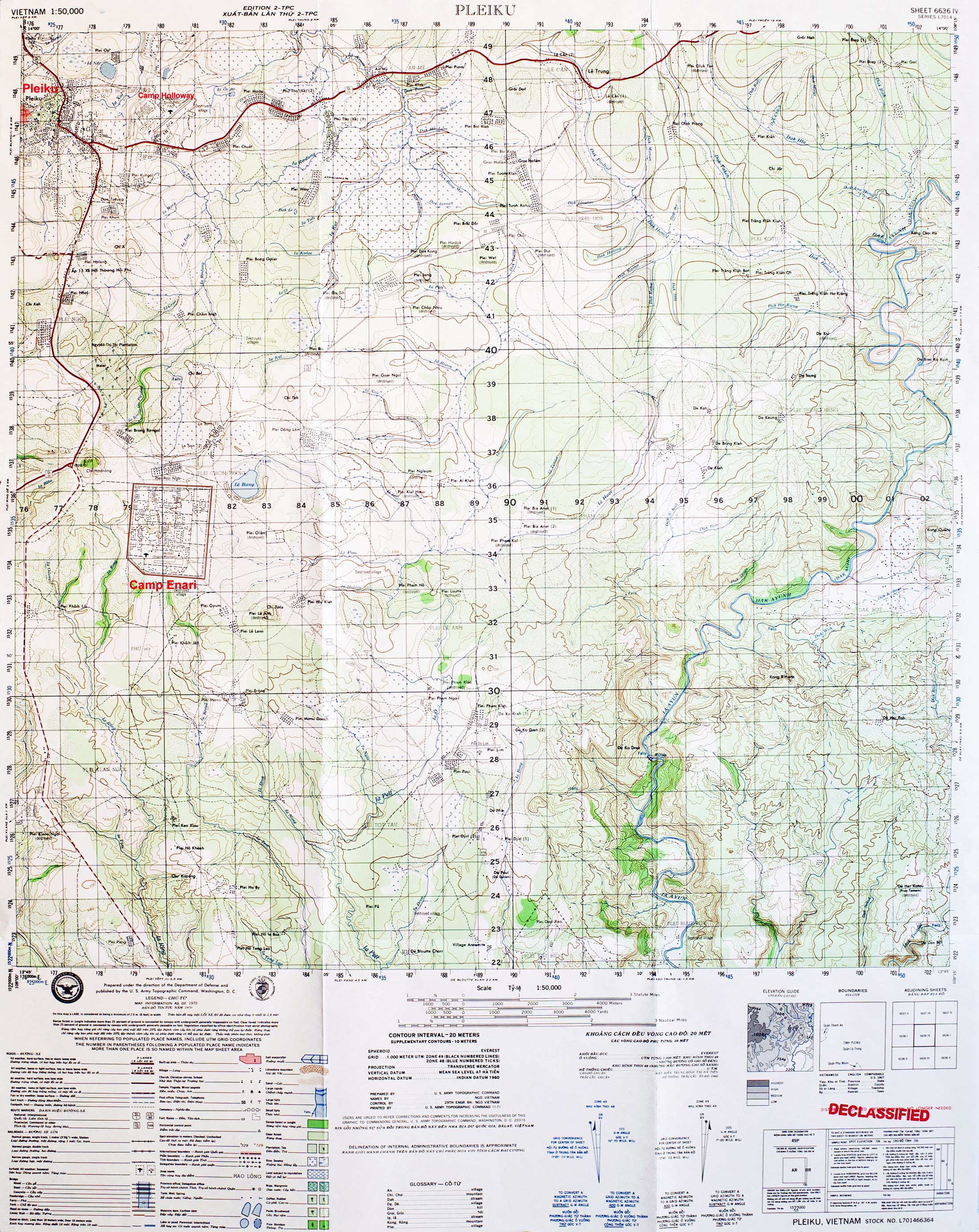
3 January (Tuesday): 4ID amends OPORD 1-67 with FRAGO 1-1-67 effective 0100Z. Bravo Company is located at the 2nd Brigade Forward Headquarters, known as “3-Tango,” pulling perimeter security duty. Those who are not on duty are allowed to watch an outdoor movie titled “Youngblood Hawke.” Shortly after the movie begins, the forward headquarters and Bravo Company are mortared. Charlie Company is in the Oasis pulling perimeter guard duty. (LZ Oasis is on Map 6536-1) Charlie Company also spends a few days in Camp Holloway (Map 6636-4) in Pleiku (probably for prisoner of war compound guard duty) (Dilkes:62, Hymoff:62, Judge, Kohler:4, 4ID AAR).
4 January (Wednesday): A squad from Bravo Company receives 10-15 rounds of enemy mortar fire west of New Plei Djereng.(4ID AAR).
7 January (Saturday): Bravo Company is airlifted to Camp Holloway (AR796466) (Map 6636-4) in Pleiku to aid in the camp’s defense, and to conduct sweeps outside the perimeter. The actions are in response to an enemy attack the evening before. Nothing is found (Kohler:4, 4ID AAR).
8 January (Sunday): Bravo Company returns to 3-Tango (Kohler:4).
10 January (Tuesday): Charlie Company captures 15 detainees while searching four villages at AR 7788430, AR 773418, AR 813534, and AR 785443 (Map 6636-4). Captain Brendan T. Quann becomes the battalion S-2, replacing First Lieutenant Michael C. Downs (Schneider:7)
11 January (Wednesday): Captain Robert E. Taggs becomes the Company Commander of Alpha Company, replacing First Lieutenant Brendan T. Quann (Schneider:7).
12 January (Thursday): Captain Edward V. Scherer becomes the Company Commander of Bravo Company, replacing First Lieutenant Melvin E. Case (Kohler:4, Schneider:7).
15 January (Sunday): Captain Louis A.K. Sylvester becomes the Company Commander for Headquarters & Headquarters Company, replacing Captain Edward D. Northrop, Jr., who becomes the Company Commander of Charlie Company, replacing First Lieutenant James E. Bigelow (Schneider:7).
27 January (Friday): Charlie Company destroys seven huts and recovers 2,500 pounds of rice (Francis Marion AAR; 4ID AAR).
24 January (Friday): 4ID amends OPORD 1-67 with FRAGO 3-1-67 effective 1400H. Specific elements from the battalion are detached for duty elsewhere (4ID AAR).
29 January (Sunday): 4ID amends OPORD 1-67 with FRAGO 4-1-67 effective 0700H returning the detached elements from the 24th back to the battalion (4ID AAR).
30 January (Monday): Bravo Company departs 3-Tango (Kohler:4).
31 January (Tuesday): 4ID amends OPORD 1-67 with FRAGO 5-1-67 effective 1000H, again detaching specific battalion elements for duty elsewhere (4ID AAR).
FEBRUARY 1967
1 February (Wednesday): The Pleiku television station goes on the air and broadcasts its first four hours of programs (Stars & Stripes: 2/1/67:6). Captain Jerry W. White becomes the battalion S-3, replacing Captain Paul S. Freeman, and Captain Douglas P. Bennett becomes the battalion S-4, replacing Captain Louis A.K. Sylvester (Schneider:7).
2 February (Thursday): Alpha Company moves overland and secures Landing Zone Lay at coordinate YA 76603386 (Map 6536-4) . The remainder of the battalion follows by air and establishes the battalion’s second fire support base for 1967 (Dilkes:62-63, Schneider:9).
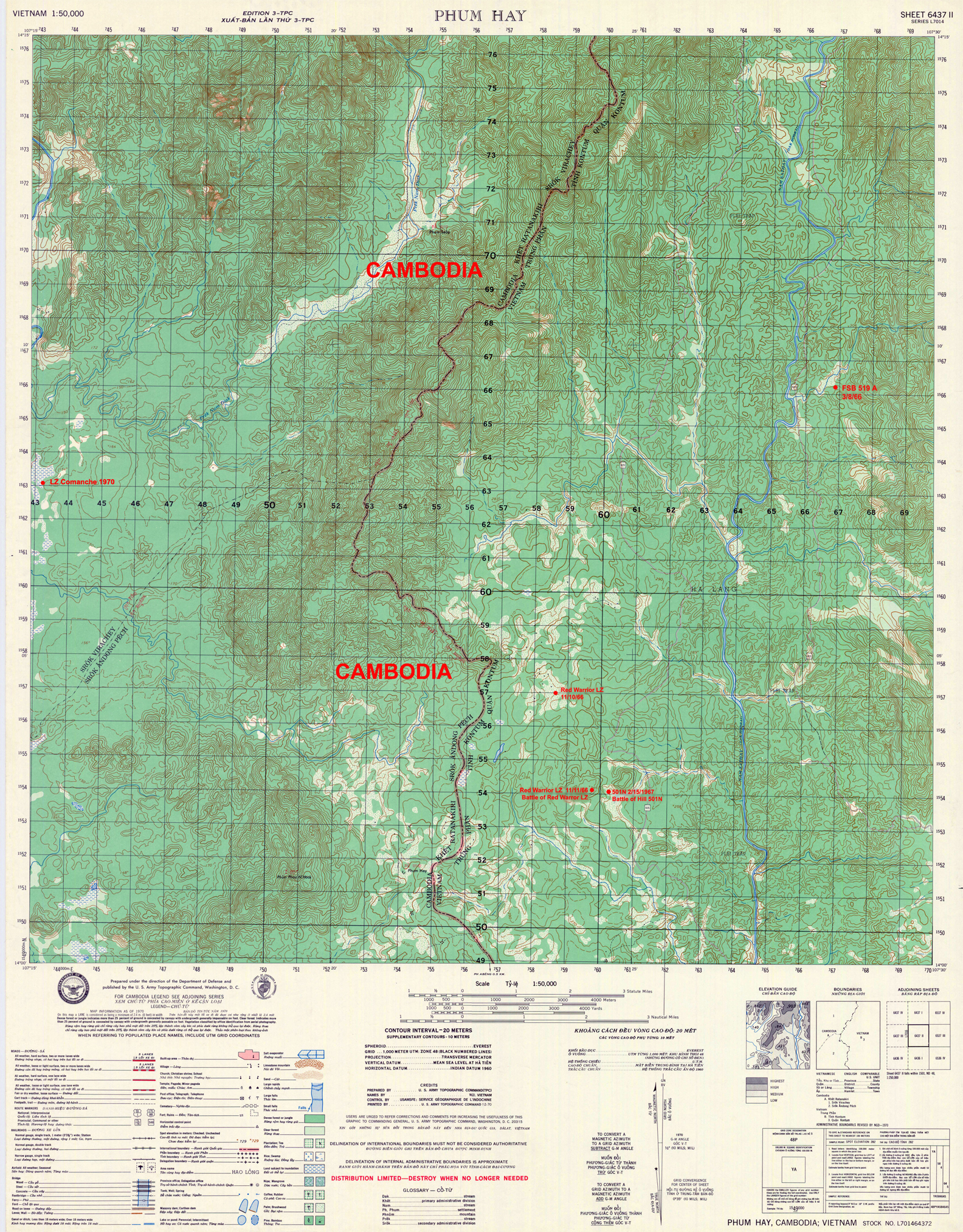
4 February (Saturday): A patrol from Alpha Company discovers and destroys 20 bunkers in the vicinity of YA 683537 (Map 6437-2) . 4ID amends OPORD 1-67 with FRAGO 6-1-67. The 2nd Brigade Task Force is not affected by this amendment (4ID AAR).
6 February (Monday): Bravo Company, on a search-and-destroy mission, finds and destroys 32 bunkers and two huts at YA 718399 (Map 6536-4) (4ID AAR).
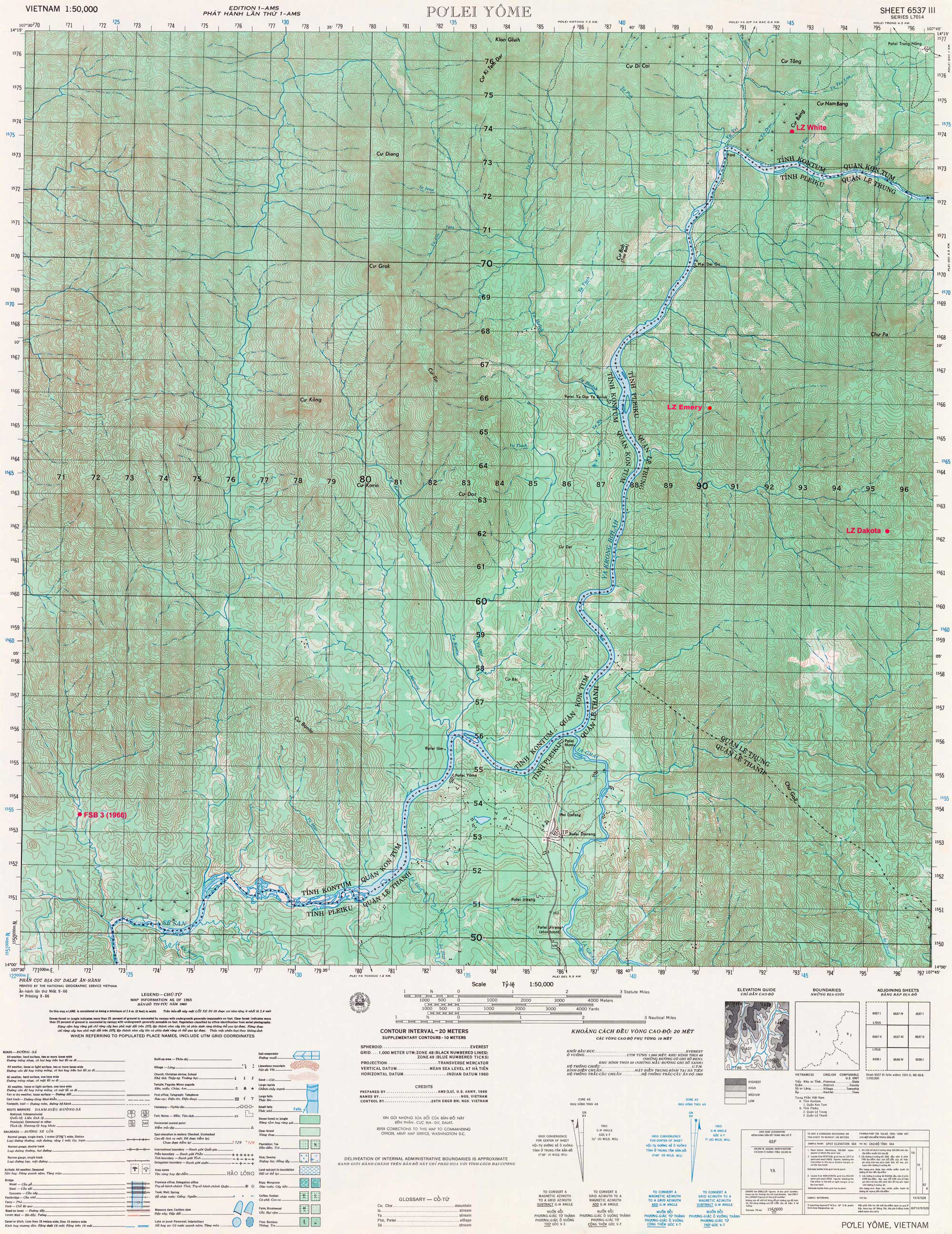
9 February (Thursday): The Recon Platoon terminates its road clearing operations with the 2nd Brigade out of 3-Tango and makes a combat assault into a landing zone in the vicinity of coordinate YA 714585 (Map 6537-3) (Schneider:9).
10 February (Friday): The battalion is tasked to establish a new fire support base at Landing Zone 501N in the vicinity of coordinate YA 602540 (Map 6437-2) , due to a North Vietnamese Army buildup west of the Nam Satnay River (Dilkes:64, Schneider:9).
11 February (Saturday): 4ID amends OPORD 1-67 with FRAGO 7-1-67 effective 1500H. The battalion’s mission remains unchanged (4ID AAR).
12 February (Sunday): Charlie Company is attached to the 2/8 Infantry, and moves overland to secure Landing Zone 501N (Dilkes:64, MacGarrigle:167, Schneider:9).
13 February (Monday): Lieutenant Colonel George Wilcox assumes command of the battalion, replacing Lieutenant Colonel James R. Lay (Schneider:9).
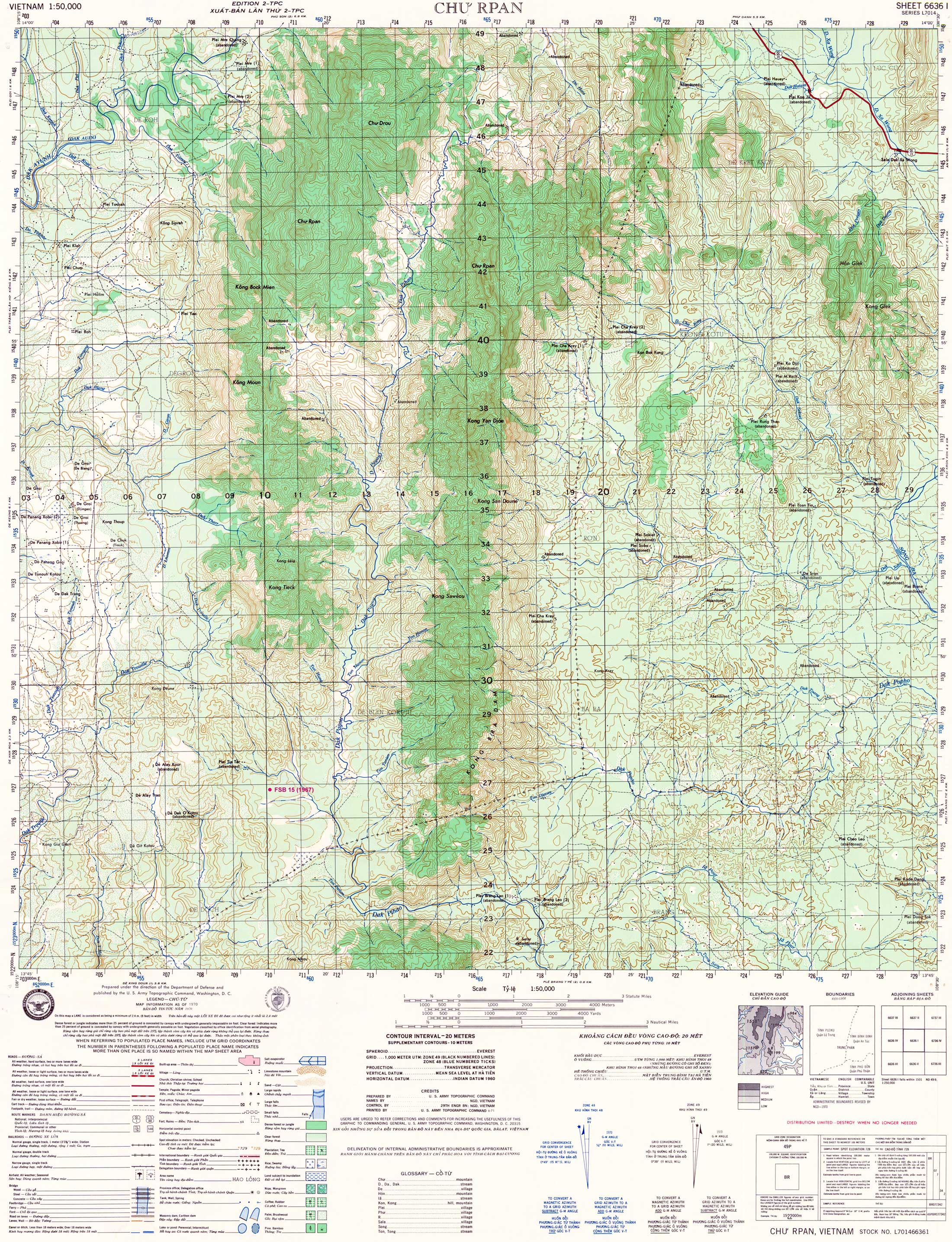
14 February (Tuesday): Charlie Company closes on Landing Zone 501N (Map 6437-2) by early evening and reports that the woodline surrounding the proposed landing zone contains recently constructed, but unoccupied, bunkers (Dilkes:64, MacGarrigle:169, Schneider:9).
15 February (Wednesday): At early morning nautical twilight (EMNT, approximately 0700) Charlie Company comes under attack by the 8th Battalion, 66th North Vietnamese Army Regiment at coordinate YA 602540 (Map 6437-2). The attack continues throughout the day until 2400. Using air and artillery support, the enemy assault is blunted until Alpha and Bravo Companies, along with the command group, are able to close into the landing zone with Charlie Company by about 1730. With the arrival of the remainder of the battalion, the landing zone changes to a fire support base. Improvements to the fire support base continue throughout the night under the illumination of flares being dropped by “Spooky” gunships. The enemy’s use of 82mm mortars, B-40 rockets, 75 mm DK-7 recoilless rifles, both light and heavy machine guns, and AK-47 and SKS rifles indicates that the battalion has been attacked by a battalion-sized force. Friendly losses include 32 WIAs (Sergeants James Hafford, West, and Barnes; Privates First Class Sherman Swim, Armstrong, Mike Datish; and 2nd Lieutenant Davis from Bravo Company) and 10 KIAs: Privates First Class Van Dyke Manners and Eric Speak of Headquarters & Headquarters Company; Sergeant Harvey Carkin, Specialists Fourth Class Johnnie Daniels, Ronald Gehler, and Michael Reily of Bravo Company; Sergeant Richard Carver, Specialist Fourth Class James Kramer, Staff Sergeant John Raymond, and Private First Class Louis Willett of Charlie Company. (Willet is posthumously awarded the Medal of Honor by President Lyndon B. Johnson on the 5th of September, 1968, for an “Unselfish Act of Bravery.”) (Dilkes:64-70, Hymoff:68-71, Kohler:4, MacGarrigle:169, Schneider:10). 4th ID After Action report (verbatim) Below: At 0130 hours Company C, 1st Battalion 12th Infantry made squad size sweep• out froa the perimeter of their fire support base. The 16 February (Thursday): Early morning sweeps by all three companies reveal enemy losses of 113 KIAs and four prisoners of war. It is estimated that the attacking force suffers an additional 200 WIAs. Additional friendly losses include KIAs Privates First Class Wayne Card of Bravo Company and Staff Sergeant William Wessells of Charlie Company. Private First Class Boyd of Bravo Company is wounded by a friendly 81mm short-round (Dilkes:70, Hymoff:68-71, Kohler:4).
Two days later the Stars & Stripes reports that a bitter clash with elements of the North Vietnamese Army occurred southwest of Kontum City on Thursday, the 16th of February. The story indicates that the fighting broke out shortly after daylight as a multi-battalion force poured into the area as part of Operation Sam Houston. An unidentified company [C-1/12] was setting up a fire support base when enemy mortar and small arms fire fell on them. Fighting continued throughout the day. Friendly casualties include the loss of two helicopters and one KIA. Enemy losses were reported at 74 KIAs (Beene:10).
A follow-up story in the Stars & Stripes on Sunday, the 19th, upgrades the enemy losses to 128, and reports that the prisoners of war included a lieutenant and a senior NCO (Editor:1).
17 February (Friday): The Recon Platoon locates and destroys three enemy mortar positions. While patrolling south of the fire support base, they also find one enemy WIA, 15 bunkers, and numerous blood trails from the firefight on the 15th. The battalion receives approximately 50 rounds of 82mm mortar at 2255. As all the rounds impact outside the fire support base perimeter; there are no casualties. Bravo Company receives one round of friendly artillery fire while adjusting their nightly defensive concentrations (DC’s), resulting in one KIA (Private First Class John Volner from Bravo Co., and three WIAs, one of whom is Staff Sergeant Tingler (Dilkes:70, Kohler:4, Schneider:10, 4ID AAR).
19 February (Sunday): 4ID amends OPORD 1-67 with FRAGO 8-1-67 effective 0400M. The battalion’s mission remains unchanged. A 2nd Brigade Long Range Reconnaissance Patrol (LRRP) team working for the battalion makes contact with three NVA, killing all three. Major Charles F. Scofield becomes the battalion executive officer, replacing Major Barney K. Neal, Jr. (Schneider:7, 4ID AAR).
20 February (Monday): Charlie Company, patrolling near the battalion FSB, discovers three NVA who had been killed in a previous action (4ID AAR).
21 February (Tuesday): 4ID amends OPORD 1-67 with FRAGO 9-1-67 effective 1810Z. The battalion’s mission remains unchanged (4ID AAR).
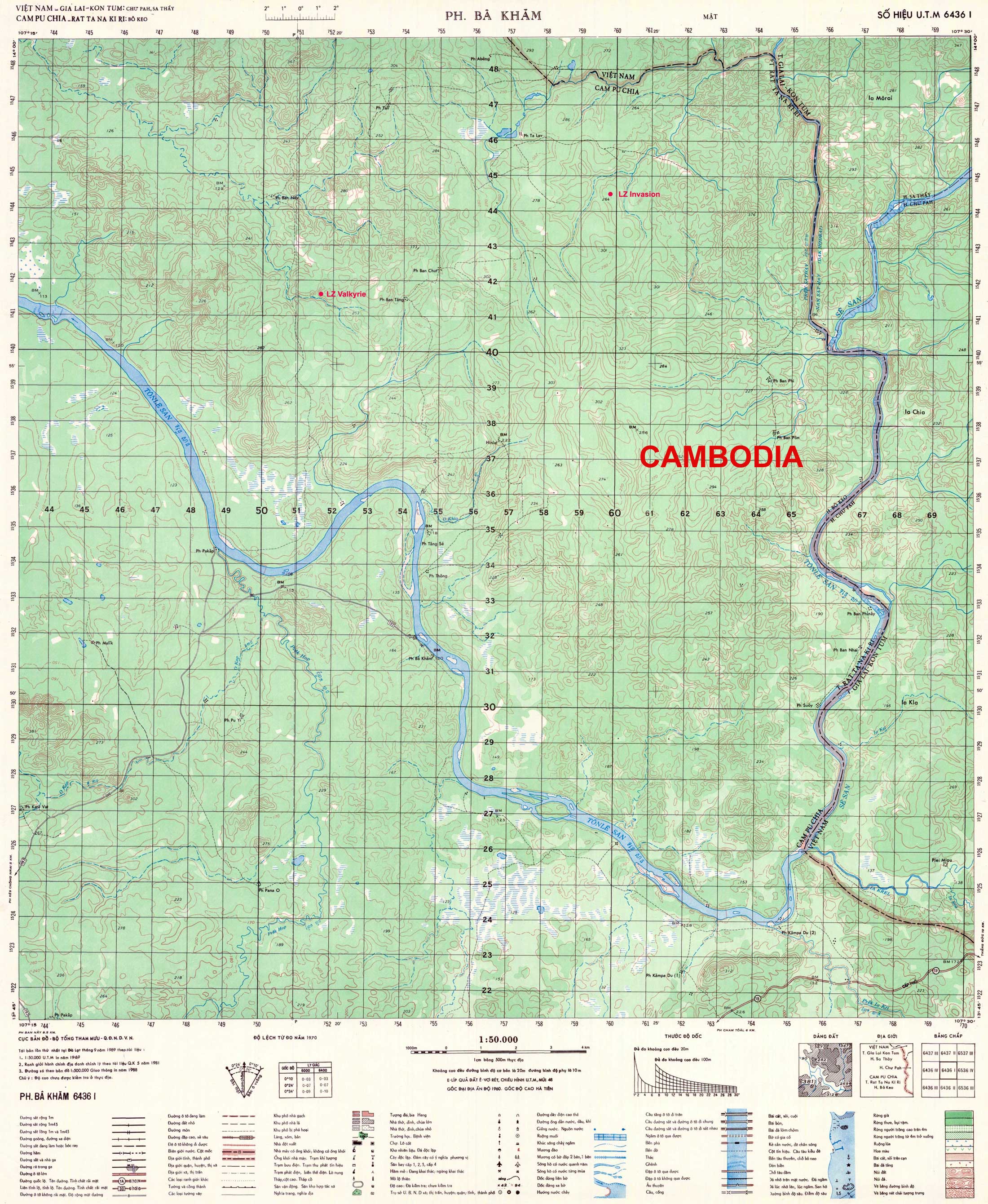
25 February (Saturday): At about 1000, Alpha Company departs Landing Zone 501-North (Map 6437-2) on a search-and-destroy mission toward Hill 770, coordinate YA 583535. At approximately 1030 at coordinate YA 590538 (Map 6437-2) the point man fires on a North Vietnamese soldier, a member of K-7 Battalion’s 2nd Company, 66th NVA Regiment, and springs an attempted L-shaped ambush. As the enemy fire increases, the company halts and begins to withdraw to the high ground to their rear. Seeing that they have lost the element of surprise, the NVA begin to maneuver around Alpha Company’s left flank in an effort to deny them the advantage of the hill. At the same time Alpha’s 3rd Platoon becomes involved in an intensive fire fight with enemy snipers on the left side of the company. The use of mortars and air strikes brings the sniper problem on the right side of the company under control. After cutting out a landing zone, a CH-47 helicopter unsuccessfully tries twice to land in an effort to start bringing out the wounded. Finally two OH-23s helicopters are successful, and the wounded and one KIA (Specialist Fourth Class Heriberto Romero-Oyola} are all evacuated. At about 1500, Charlie Company, who has been conducting patrols to the northeast, finally closes with Alpha Company. The battle lasts for the remainder of day, with the NVA breaking contact at about 1915. Enemy losses are 48 KIA and three wounded, who were captured. Friendly losses include the one KIA and 30 WIAs (CAAR-OSH:06/28/67-8, Dilkes:70-71, MacGarrigle:71, Schneider:10, 4ID AAR).
The Stars & Stripes reports that an unidentified company of the 4th Infantry Division [A-1/12] killed 45 Communists on Saturday, the 25th of February, in a series of clashes in the Central Highlands 40 miles southwest of Kontum City. Friendly losses were described as “light” (Editor:6).
26 February (Sunday): 4ID amends OPORD 1-67 with FRAGO 10-1-67 effective 0600H. The battalion’s mission remains unchanged. Alpha Company makes a sweep of the battle area and finds three enemy KIAs and WIAs, 12 AK-47 rifles, four SKS rifles, four light machine guns, and one B-40 rocket launcher. One of Alpha’s platoons makes contact with an unknown-sized enemy force during the sweep and kills two of them. Charlie Company also makes contact with the NVA and kills two. Total enemy losses for the two days are 48 KIAs and three WIAs/CIAs. Friendly losses are 30 WIAs ( CAAR-OSH: 06/28/67-8, Dilkes:71, 4ID AAR).
27 February (Monday): A 2nd Brigade LRRP team that is attached to the battalion makes contact with 12 NVA at coordinate YA 602541 (Map 6436-1) . 1st Platoon of Bravo Company is sent out to assist the LRRP team. The encounter results in two enemy KIAs (CAAR-OSH:06/28/67-8, Dilkes:71, Schneider:10, 4ID AAR).
MARCH 1967
2 March (Thursday): Alpha and Charlie Companies conduct search-and-destroy missions, while Bravo Company provides security for the fire support base. That evening the fire support base receives approximately 40-50 rounds of 82mm mortar fire, resulting in two friendly KIAs (Privates First Class George Sloan and Richard Tissier of Bravo Company) and 16 WIAs, which include Specialist Fourth Class Jim R. Coleman, Tommy M. Sanders, Henry W. Cooper, and Robert H. Hines of Bravo Company (Dilkes:71, Schneider:10, 4ID AAR).
3 March (Friday): Between 0145 and 0200, the fire support base comes under mortar fire again. The attack consists of approximately 40 rounds of 82mm. There are no friendly casualties. Major Grady W. Williams assumes command of the battalion from Lieutenant Colonel George Wilcox later in the day. That night sniper fire and 15 more mortar rounds wound two in the FSB (Dilkes:71, Schneider:7 and10, 4ID AAR).
4 March (Saturday): Daylight sweeps by Bravo Company locate the mortar firing points from the previous day, which are then destroyed (4ID AAR).
8 March (Wednesday): The battalion combat assaults into a new landing zone designated as 519-Alpha at coordinate YA 668663 (Map 6437-1) , establishes their fourth fire support base, and continues their search-and-destroy mission. During the airlift, one UH-1D crashes due to mechanical failure, injuring five and destroying the aircraft. 4ID amends OPORD 1-67 with FRAGO 12-1-67 effective 2300H. The battalion’s mission remains unchanged (Schneider:10, 4ID AAR).
11 March (Saturday): Private First Class Harvey Chambers Jr. of Alpha Company is killed by enemy small arms fire (Arnold KIA records, Dilkes).
13 March (Monday): Alpha Company is in their company patrol base and receives some replacements (Dilkes:78).
13-14 March (Monday-Tuesday): The 2nd Brigade Command Post at 3-Tango (coordinate YA 855455) (Map 6536-4) receives over 330 rounds of 82mm mortar, 75 mm recoilless rifle fire, and B-40 rocket fire from the south. Because the base is so crowded with fuel and ammunition stockpiles, losses include 1 KIA, 87 WIA’s, including Sergeant Eberhar Bruell of HHC, and 25 vehicles destroyed or damaged. Consequently the battalion is alerted to relocate to the southwest of 3-Tango and continue their mission (Dilkes:88, Schneider:11, MacGarrigle:173; 4th ID OR:3).
A report in the Stars & Stripes states that the 4th Division’s 2nd Brigade command post was hit by enemy mortars three times during the early morning hours and daylight [13-14 March]. Losses included one KIA and 75 WIAs. The report also states that the nearby Special Forces camp at New Plei Djereng was hit by mortar fire at the same time (S&S 16/03/67:1).
Charlie Company recovers two bags of mail belonging to Bravo Company. Because one bag is found high in a tree, it is believed they fell from a helicopter. Judging by the dates, the bags have been lost for about a month (Stars & Stripes 13/03/67:10).
16 March (Thursday): Bravo Company, along with the Recon Platoon, initiates a battalion combat assault back into LZ Lay, (Map 6536-4) which has been re-designated as Landing Zone 10-Bravo, at coordinate YA7663386 (Map 6536-4). Upon landing they discover that the landing zone has been mined with aerial mines and is occupied by a reinforced squad from the 95-B NVA Regiment. During the landing, one helicopter is destroyed, and seven others are damaged. The North Vietnamese are driven off at a cost of five KIAs. Friendly losses include Private First Class Elbert Blackburn, Specialists Fourth Class Clark Miller and Michael Monahan, and seven WIAs from Bravo Company, which include PFC’s Edward L. Moody and Homer L. Wiley; one WIA in Alpha Company; and one WIA from Recon, Sergeant First Class John Shaffer. Once the battalion has consolidated its resources at the landing zone, the landing zone becomes the new fire support base (the fifth of the year). Alpha Company then moves out and establishes a separate night defensive position approximately 1000 meters away. Charlie Company also departs, leaving Bravo Company and the Recon Platoon manning the fire support base perimeter. At 2000 the new fire support base receives approximately 35 rounds of 82mm mortar fire, resulting in seven more WIAs (Dilkes:78-81; Phillips:1-2, Schneider:11, 4ID AAR)
17 March (Friday): While conducting an early morning sweep outside their portion of the battalion perimeter, a squad from the Recon Platoon engages a reinforced squad from the 95-B NVA Regiment at coordinate YA 765391 (Map 6536-5) while Charlie Company does the same at coordinate YA 763377 (Map 6536-5) . Both engagements result in a total of three friendly KIAs (Recon’s Staff Sergeant Julio Kaneko, and Charlie Company’s Specialist Fourth Class Jerry Chunges and Private First Class Otto Tucker), 13 friendly WIAs (one from Charlie Company and 12 from Recon, four of whom are Specialists Fourth Class Rodney Ray and Jim Phillips, and Privates First Class Larry H. Reed and Melvin L. Harris), and 14 enemy KIAs (two by Charlie Company and 12 by Recon). Later in the day Alpha and Charlie Companies also find additional mined landing zones during their sweeps of the surrounding area. 4ID amends OPORD 1-67 with FRAGO 14-1-67 effective 2330H. The battalion’s mission remains unchanged (Dilkes:81, Phillips:2-3, Schneider:11, 4ID AAR).
A report in the Stars & Stripes states that troopers from a company [B 1/12] from the 4th Division’s 2nd Brigade was attacked as their helicopters landed in a landing zone on Thursday [16 March]. US losses were not provided, but one helicopter was destroyed (Stars & Stripes 18/03/67:24).
18 March (Saturday): Alpha Company moves out from its night defensive position and continues with its patrol actions. Bravo Company does the same, and shortly makes contact with the enemy. Alpha Company is then diverted to Bravo’s position to give assistance. By the time Alpha Company arrives at the position where Bravo has made contact, the action has been terminated and Bravo Company has continued on. Bravo Company suffers one WIA. Enemy losses are not recorded (Dilkes:81).
24 March (Friday): A Bravo Company listening post detects three North Vietnamese soldiers at coordinate YA 686341 (Map 6436-1) and engages them, killing one (Dilkes, Schneider:11).
28 March (Tuesday): 4ID amends OPORD 1-67 with FRAGO 16-1-67 effective 1600H. The battalion’s mission remains unchanged (4ID AAR).
APRIL 1967
02 April (Sunday): Specialist Fourth Class Andrew A. Simons of Bravo Company is wounded (Phillips).
03 April (Monday): Lieutenant Colonel Corey J. Wright assumes command of the battalion from Major Grady W. Williams (Dilkes:85, Schneider:7).
04 April (Tuesday): At 0410 Bravo Company receives 10-15 rounds of mortar fire at their location west of Plei Djereng (Dilkes).
05 April (Wednesday): After 95 days of combat operations, Operation Sam Houston is terminated, and Operation Francis Marion begins (Dilkes:85, MacGarrigle:175, Schneider:11).
06 April (Thursday): Alpha Company makes a combat assault into an old landing zone and sets up a night defensive position and patrol base (Dilkes:85, Francis Marion AAR).
07 April (Friday): The 3rd Platoon of Alpha Company is sent out on patrol. At 1245, approximately 1000 meters out from their company patrol base, they encounter a well-used trail at YA 788535 (Map 6537-3) . Platoon Sergeant Robert Wright dispatches a fire team led by Sergeant Butler down the trail to investigate it. Within moments, the fire team makes contact with three North Vietnamese soldiers. The remainder of the platoon then quickly consolidates on the fire team and engages the NVA soldiers for 5-10 minutes. The engagement terminates abruptly when two of the enemy soldiers break contact and depart the area. A sweep of the battle area reveals one enemy KIA. There are no friendly casualties (Dilkes:85-86, Francis Marion AAR, 4th ID OR:55).
08 April (Saturday): Alpha Company departs its patrol base and returns to the battalion’s fire support base, closing in at about 1600. (Bravo Company had moved out earlier.) (Dilkes:86, Judge).
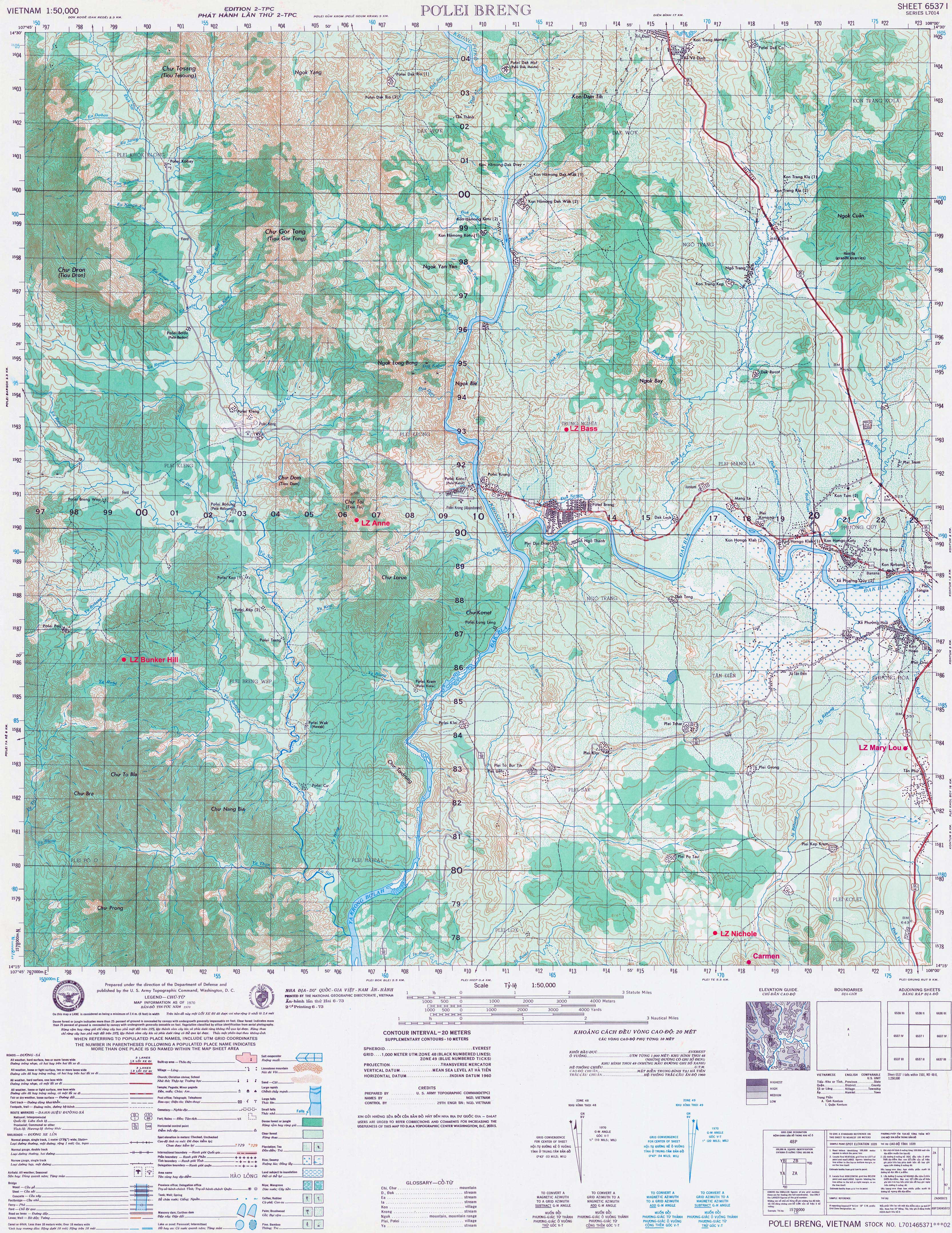
10 April (Monday): The battalion relocates by air and motor march to a Special Forces camp at Polei Kleng, coordinate ZA 027936 (Map 6537-1) . Once there, Charlie Company establishes the sixth fire support base, while Alpha and Bravo Companies go out on patrol in the nearby hills. Bravo Company, located at ZA 027937 (Map 6537-1), receives 10 rounds of enemy 82mm mortar fire. There are no casualties (Dilkes:87-88, Francis Marion AAR, Schneider:11).
16 April (Sunday): Charlie Company is airlifted from Polei Kleng to the II Corp heli-pad and then establishes a patrol base at coordinate ZA 231492 (Map 6536-1) they then become the II Corp reaction force and prisoner of war camp guards. Search-and-destroy operations for the remainder of the battalion at Polei Kleng prove fruitless (Dilkes:88, Schneider:11).
17 April (Monday): Alpha Company returns to the fire support base (Dilkes).
18 April (Tuesday): The battalion (-) moves the fire support base to its seventh location at coordinate ZA 160066 (Map 6536-2) north of Special Forces camp near Plei Me (Dilkes:90, Schneider:11).
19 April (Wednesday): Bravo Company makes a combat assault with negative results (Judge).
20 April (Thursday): The fire support base is moved to its eighth location at coordinate ZA 028085 (Map 6536-2), approximately 5,500 meters from the Cambodian border (Dilkes:97, Schneider:11).
28 April (Friday): Alpha Company returns to the fire support base and takes over perimeter guard duty, while Bravo Company moves out on patrol (Judge).
19-30 April: The remainder of the month is then spent relocating Montagnard villages under the Edap Enang Program. This program involves seven villages and 833 Montagnards (Dilkes:90-92, Schneider:11).
30 April (Sunday): Alpha Company is in the fire support base, while Bravo Company is out helping to clear villages (Dilkes:95). The Personnel Roster (DA Form 305-3) prepared by the AG Data Processing Division, USARPAC lists by name 168 enlisted personnel assigned to Charlie Company.
MAY 1967
1 May (Monday): At 0730, Alpha Company is airlifted from the fire support base by CH-47 helicopters to a landing zone at coordinate ZA 152209 (Map 6536-2) . From there they march overland for about six kilometers where they link up and operate with the 2nd Battalion, 8th Infantry (Mechanized) in the general vicinity of coordinate ZA 130250 (Map 6536-1). The 2/8 Infantry had encountered a bunker complex full of NVA soldiers south of the Oasis earlier in the day and needed some reinforcements. It isn’t until approximately 2000 that the linkup between the two units is completed (Dilkes:95, Schneider:12).
A report in the Stars & Stripes describes the contact of 1 & 2 May that involved Alpha Company. The editor states: “In a battle that raged all day, 4th Infantry Division troops of Operation Francis Marion clobbered a North Vietnamese battalion entrenched in log-covered bunkers and caves 21 miles southwest of Pleiku City. The dug in battalion was first spotted by a company of the 2nd Brigade [2/8 Infantry] at 8 a.m. At noon the fighting was heavy and Army helicopters and artillery and Air Force strikes were pounding the Communist position. By nightfall, 81 dead North Vietnamese were counted. One U.S. infantryman was killed” (Stars & Stripes, 4 May:6).
Bravo and Charlie Companies continue their search-and-destroy operations north and west of the battalion fire support base. In the absence of the line companies, a provisional element consisting of personnel from the battalion, the 2nd Battalion, 8th Infantry (Mechanized), and Headquarters & Headquarters Company, 2nd Brigade from the battalion trains security at the Oasis are furnished to assist the Recon Platoon in providing security for the battalion fire support base (Schneider:11-12).
3 May (Wednesday): A sweep of the bunker complex area south of the Oasis (MAP 6536-1) by Alpha Company reveals 137 enemy KIAs, including two Chinese (Dilkes:96). Captain Perry S. White becomes the Headquarters & Headquarters Company Commander, replacing Captain Louis A.K. Sylvester (Schneider:7).
4 May (Thursday): Alpha Company returns to the battalion, and then conducts a combat assault into the Ia Drang Valley in the general vicinity of YA 859125, which is about 17 kilometers south of the current fire support base (Dilkes:97, Schneider:12).
11 May (Thursday): The battalion hears an arc light mission (B-52 strike) taking place west of the fire support base near the Cambodian border (Dilkes:97).
13 May (Saturday): The 2nd Squad of the 3rd Platoon of Alpha Company is sent out to set up a night ambush (Dilkes:99).
14 May (Sunday): At first light Alpha Company’s ambush squad returns to the company with negative results (Dilkes:99).
16 May (Tuesday): Alpha Company discovers 10 enemy bunkers at YA 788535 (Francis Marion AAR).
20 May (Saturday): At 0830 Alpha Company departs the fire support base to set up a company patrol base. The general plan is for Alpha Company to remain out until about the 29th of May chasing B-52 strikes doing bomb damage assessments in the hills around Duc Co. The Recon Platoon is attached as a company reserve and follows along behind Alpha Company (Dilkes:100).
21 May (Sunday): The 3rd Platoon of Alpha Company discovers a company-sized bunker complex while on patrol. Found among the bunkers are the remains of two North Vietnamese soldiers (Dilkes:103).
30 May (Tuesday): At about 0830 Specialist Fourth Class Alfred Ellis of Headquarters & Headquarters Company (the Recon Platoon) is killed in a friendly fire incident inside the fire support base (Dilkes, Hill) and Corporal Jimmie L. Jones of Charlie Company is killed by enemy small arms fire (Arnold KIA records).
31 May (Wednesday): The month of May has been spent in search-and-destroy operations west of the Oasis, resulting in negative enemy contact for the battalion. During that time the buildup of fire support in the fire support base includes 8" self-propelled guns, 155mm and 105mm howitzers, twin 40 mm “Dusters,” M-48 tanks, and the battalion’s 4.2" and 81mm mortars (Dilkes: 97, Schneider:12).
JUNE 1967
01 June (Thursday): The battalion relocates the fire support base to its ninth location at coordinate YA 845256 (Map 6536- 4) just east of the Duc Co Special Forces/CIDG camp, and west of Kontum. Bravo Company provides fire support base security, while Alpha and Charlie Companies conduct search-and-destroy operations on the high ground north and west of Duc Co. The monsoon has begun and it is raining all the time (Dilkes:105, Schneider:12).
02 June (Friday): A platoon from Alpha Company and three tanks from Bravo Company 1/69 Armor link up with Recondo patrol 2G at YA 770221 (Map 6536- 4) after the patrol encounters 17 NVA. The contact results in one non-battalion U.S. kill and five wounded, and eight NVA killed and eight weapons captured. In a separate event First Sergeant Roy Chandler takes over as Alpha Company’s First Sergeant, replacing First Sergeant Robert E. Crouch (Dilkes:107).
05 June (Monday): Patrol operations are centered in an area northwest of Pleiku along the Ya Krong Bolah River near the village of Chu Kram. Alpha Company reports seeing five North Vietnamese soldiers (Dilkes:107). Captain Donald R. Moore becomes the Charlie Company Commander, replacing Captain Edward J. Northrop (Schneider:7).
07 June (Wednesday): Charlie Company and the command group move the fire support base south to its 10th location at coordinate YA 889136 (Map 6536-3) in the vicinity of Chu Kram and the Chu Kram Mountain (Hill 583), while Alpha Company maneuvers to the top of Chu Kram Mountain (Dilkes:108-111, Schneider:12).
14 June (Wednesday): Alpha Company 1st Battalion, 22nd Infantry is attached to the battalion. Bravo Company is airlifted to coordinate YA 911148 (Map 6536-3), and assumes a surveillance mission in the area, and Charlie Company continues its patrolling. Alpha Company returns to the division base camp (Camp Enari) for a six day stand-down and refitting (Dilkes, Schneider:12).
15 June (Thursday): A LRRP patrol working for the battalion makes contact with two squads of NVA soldiers at 1510, resulting in three enemy KIAs. After breaking contact with the enemy, the LRRP patrol links up with a platoon from Bravo Company. At 1710 another LRRP team operating in the battalion area of operation also makes contact with the NVA. One platoon from A-1/22 combat assaults into the contact area, but a thorough search fails to provide any further information on the enemy. No casualties are incurred as a result of either of these contacts (Dilkes:111, Schneider:12).
20 June (Tuesday): Alpha Company is returned to the field, while Bravo Company rotates back to the divisional base camp for their turn at being refitted (Dilkes:113).
22 June (Thursday): At 0012 one reinforced platoon from Bravo Company conducts a night combat assault and cordons off a village in the general vicinity of coordinate ZA 762261. The village is searched with negative results. The platoon then returns to the fire support base (Dilkes, Schneider:12).
21-24 June: Alpha Company makes two combat assaults south of Duc Co in the Ia Drang Valley, both efforts resulting in negative contact (Dilkes:114).
25 June (Sunday): At 0010 a platoon from Bravo Company conducts another night combat assault to the vicinity of coordinate ZA 105411 (Map 6537-2) , establishes a blocking force, links up with elements of the 1st Battalion, 10th Cavalry, and then returns to the fire support base with negative results (Schneider: 12, Dilkes). Captain Thomas V. Borlund becomes the Alpha Company Commander, replacing Captain Robert E. Taggs (Schneider:7).
27 June (Tuesday): Bravo Company is returned to the field, while Charlie Company rotates back to the divisional base camp for their turn at being refitted (Dilkes:113, Schneider:13).
27 June - 11 July: The fire support base remains at coordinate YA 889136, (Map 6536-3) while Alpha and Bravo Companies continue to operate out of their own company patrol bases with platoon-sized elements conducting patrols or sweeps. The battalion is aware that the 66th and 88th NVA Infantry Regiments are maneuvering in the battalion’s area of operation (Dilkes:118, Schneider:13).
JULY 1967
The first week of July sees Charlie Company guarding the fire support base, while Alpha and Bravo Companies continue running platoon-sized patrols out of their company patrol bases (Dilkes:120, Easterly:12).
02 July (Sunday): Captain Brian W. Rushton becomes the Bravo Company Commander, replacing Captain 1 (Schneider:7).
05 July (Wednesday): Alpha Company discovers three dead NVA buried at YA 850130.
07July (Friday): Alpha Company finds a hut filled with ammo, weapons, and communications wire. Bravo Company comes out of the fire support base, and Charlie Company moves in (Dilkes, Hymoff:114).
08 July (Saturday): At 0945, soon after departing their previous night’s location, Bravo Company’s 2nd platoon (82-60) discovers a recently-used trail at YA 854176 (Map 6536-3) running in a southwesterly direction, the same direction Bravo Company is heading. The battalion S-3 issues FRAG Order 2-67 at 1200 hours to the companies. After moving almost 1000 meters since their last sighting four hours previously, the 3rd Platoon of Bravo Company (82-61) at 1340 hours engages two NVA at YA 840163 (Map 6536-3, killing both. At 1605 the same platoon begins a running engagement with an estimated platoon-sized group of NVA at YA 842163 (Map 6536-3 . By 1830, through the use of air and artillery strikes and demolitions, they have accounted for five enemy KIAs, one of whom is an officer; recovered several weapons; and destroyed a small tunnel complex. There are no friendly casualties (CAAR, Dilkes:120, Hymoff:114).
09 July (Sunday): At 0600 Alpha Company SP’s and begins its return to the fire support base at YA 889136 (Map 6536-3) to assume its security mission. By 1000 hours Charlie Company has SP’d from the FSB and is en route to position “Axe” for their next search-and-destroy mission. The Recon Platoon (74), which has been operating just west of Bravo Company, discovers three NVA bodies at YA 833164 (Map 6536-3) )who had been killed by artillery during the previous day’s action. By 1500 hours FRAG Order 2-67 has been implemented, and Bravo Company is in position “Spear” in the vicinity of YA 8416. Charlie Company is in position “Axe” in the vicinity of YA 8516 (Map 6536-3). Intelligence reports from division and brigade indicate that enemy forces are operating near Bravo and Charlie Companies. At 0300, the battalion observes a B-52 arc light mission west of their position along the Cambodian border and is tasked by brigade to investigate the bomb damage the following day (CAAR, Dilkes:120, Easterly:14, MacGarrigle:304, Schneider:13).
10 July (Monday): The morning sees Bravo and Charlie Companies ready to begin the patrols for the day. Between 0830 and 0930, Bravo Company (82) discovers a recently-used trail and hears movement. Charlie Company (83) is ordered by battalion to move westward from its night position and investigate the arc light strike they observed; at 1005 they find 8-10 unoccupied bunkers at YA 854148. At 1250 the Recon Platoon (74) encounters and fires on one NVA washing his clothing on a stream bank at YA 858118 (Map 6536-3. At 1655 at YA 821146, (Map 6536-3Bravo Company receives small arms fire from an unknown-sized enemy force and sustains one WIA. Charlie Company spends the night in an abandoned FSB; it rains during the night (CAAR, Dilkes:121, Easterly:15).
11 July (Tuesday): Bravo and Charlie Companies are given a new location to move to. Arriving at the strike zone by noon, nothing but bomb craters are found (en route, Bravo Company discovers one NVA body). Both companies report movement on their flanks, then move east and establish separate perimeters about a kilometer apart amid the wooded and rocky hills. Work continues throughout the afternoon as both companies construct covered bunkers and clear helicopter landing sites by nightfall (Birch:27, CAAR, Dilkes:122, MacGarrigle:304).
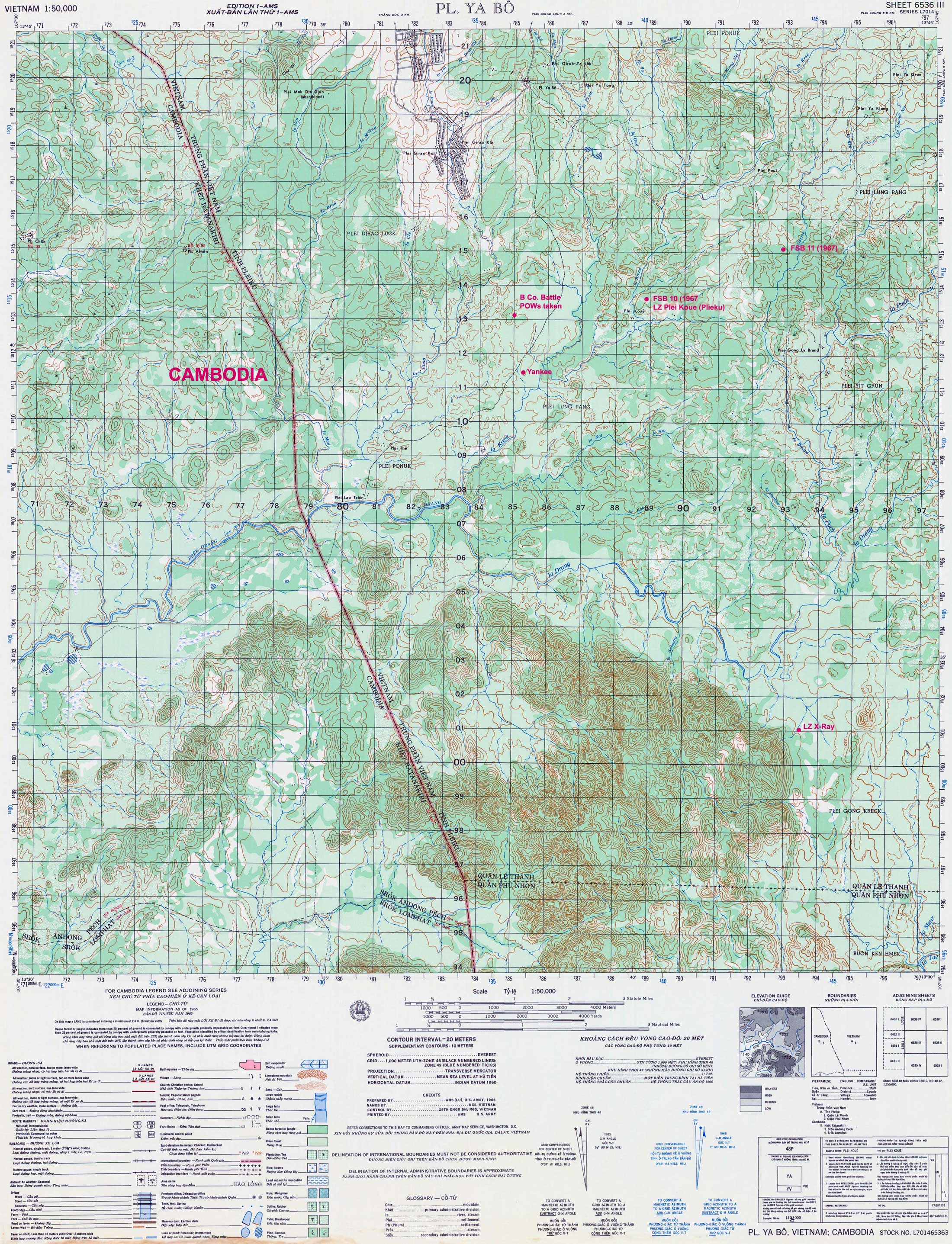
12 July (Wednesday): The day begins with Alpha Company guarding the fire support base. Both Bravo and Charlie Companies are in their fog-covered company patrol bases and after sending in their respective strength reports (Bravo-65 and Charlie-75), are instructed by battalion to remain in place and sweep their patrol base areas with platoon-sized patrols. At about 0830 Charlie Company’s 2nd Platoon (callsign 26) under-strength patrol makes contact with a small enemy force of 10 soldiers from the 66th PAVN Regiment, killing three and driving off the rest. By 0930 the first serious small arms fire begins to crackle as both companies begin calling for mortar and artillery fire. The Recon Platoon is on a small hill approximately 2000 meters east of Bravo and Charlie Companies’ positions when the firing begins. Within an hour, Alpha Company is alerted to stand-by for a combat assault into the battle site and Charlie and Bravo Companies. Alpha has to wait for reinforcements to arrive from the battalion area at Camp Enari, as well as for the Recon Platoon to return from its location in the field, before it can depart. At approximately 1130 hours, an estimated North Vietnamese Army regiment attacks Bravo Company in force, while a smaller enemy force keeps Charlie Company in place, preventing them from coming to the aid of Bravo Company. By 1330 all contact with Bravo Company has been lost and the firing has stopped. By 1335 Alpha Company is on the ground several kilometers away at LZ Yankee (YA 853115) (Map 6536-3 and moving toward the battle area. Casualties are 152 enemy KIAs compared to 32 friendly KIAs, 28 friendly WIAs, and seven MIAs who, it turns out, are taken captive as prisoners of war (see battalion casualty records). Of the seven POWs, only five would be repatriated at the end of the war (Birch:27-29, CAAR, Dilkes:122-141, Easterly:16-27, MacGarrigle:305-306, Schneider:13). KIA's - Pernell Claud, Gary Coleman, Robert Echols, Gerald Fox,, Willie Fullilove, Eddie Gibson, Stephen Groth, Ronald King, John Harlan, Wandle Hickman, David Horn, Jerry Hughes, Rockwell Jamison, Charles Judge Jr, Jerry Lanier, Milford McKee, Joseph Miller, Owen Montgomery, Gaylord Nootz, Salvatore Polizzi, Brian Ruston, James Schiele, Robert Strange, James Van Bendegom, Gary Waguespack ,Floyd Williams, Moses Williams, Tyrone Combs, HHC - Ronald Crain, HHC - Floyd Noe, HHC Troy Sexton, HCC - Fred Bragg Jr - 42nd Arty, LeRoy Charboneau - 42nd Arty, James Haider - 42nd Arty. A report in the Stars & Stripes entitled “Reds Cut Off American Unit, Kill 35" is the first public indication of the terrible situation Bravo Company found itself in on the 12th of July. The UPI story states that a 4th Infantry Division company [Bravo, 1/12] had been cut off early on the morning of the 12th while investigating damage done by B52 strikes against suspected Communist concentrations about three miles from the Cambodian border. UPI photographer Bill Hall reports that elements of at least two North Vietnamese divisions had been building their forces in the area and are responsible for the American losses. In the first of two follow-up reports to the July 12th incident, the Stars & Stripes prints an interview of Second Lieutenant Gary Rasser, the platoon leader of 2nd Platoon, by reporter Peter Arnett. In the interview, titled “Hurt, Cut Off, 5 GIs Fight Way to Safety,” Lieutenant Rasser recounts his miraculous survival, giving credit to those who fought along side him as they made their way through enemy lines after being cut off and out-numbered. Lieutenant Rasser stated that his “. . .ordeal began when his under strength 18-men platoon was sent forward to the relief of another platoon surrounded on a small hill by enemy troops. They themselves were soon cut off.” The report goes on to detail the loss of all command and control within the company when the commander was killed, and how Lieutenant Rasser and a few others finally made it back to the friendly lines they had started out from five hours earlier (Stars & Stripes: 4).
The second story on the same page, titled “Battered GIs Hunt Missing,” chronicles the efforts made by the battalion to locate the missing members of Bravo Company. The report is carried on the AP wire, but has no by-line or credit. The battalion commander, Lieutenant Colonel Corey Wright, is quoted in the report as saying that the “. . . outnumbered company gave a magnificent account of themselves, killing 110 of the enemy troops.” The story further indicates that all hope for any more survivors fades when one WIA who had been found alive by pretending to be dead, reports seeing wounded men being shot by the North Vietnamese as they search the battlefield after the shattered American force withdrew. The enemy troops carry away much of the weapons and equipment carried by Bravo Company (Stars & Stripes: 4)
12 - 14 July: Alpha and Charlie Companies continue to patrol together, searching the battle area for the seven MIAs with negative results (Birch:29-31, Dilkes:143, Schneider:13).
13 July (Thursday): Alpha and Charlie Companies set up a two-company patrol base along a road. At 1010 hours four tanks from Task Force Troop B, 1st Squadron, 10th Cavalry and Company A, 3rd Battalion, 8th Infantry are brought in for one night. Captain David A. Dluzyn becomes the Bravo Company Commander, replacing Captain Bryan W. Rushton (Dilkes:143, Schneider:7).
14 July (Friday): Alpha and Charlie Companies move back into the firefight area of the 12th (Dilkes:143).
16-31 July: Bravo Company is in the fire support base, while Alpha and Charlie Companies continue their patrolling around the fire support base. Call-signs during this time are Alpha:81, Bravo:82, and Charlie:83. (Dilkes:144, 147).
17 July (Monday): The fire support base is displaced to its 11th location at coordinate YA 929151 (Map 6536-3), with Bravo Company providing fire support base security. Alpha and Charlie Companies continue their search-and-destroy missions in the vicinity of coordinates YA 905098 (Map 6536-3) and YA 929151 (Map 6536-3), respectively (Schneider:13).
18 July - 1 August: Bravo Company remains in the fire support base, providing security and training its replacements. Alpha and Charlie Companies continue their search-and-destroy missions during this period. (Dilkes:147, Schneider:13).
22 July (Saturday): The battalion commander arrives at Charlie Company’s position and briefs the company commander and the platoon leaders on a combat air assault scheduled for the next morning (Easterly:55).
23 July (Sunday): At 0700 Charlie Company initiates a combat assault into an old firebase and a new area of operation. The battalion surgeon, Captain Melvin Deutsch, accompanies the company, which closes on their night position around 1500 (Easterly:55, Dilkes:147).
24 July (Monday): At 1000 at YA 938086 (Map 6536-3) Alpha Company receives one round of small arms fire resulting in one friendly wounded. At 1220 Charlie Company observes seven NVA and captures one. At about 2045 Charlie Company reports movement, fires its DEFCONs and brings in Spooky to drop flares. No enemy sighted (Easterly:60, Francis Marion AAR).
25 July (Tuesday): Charlie Company returns to the firebase they started out from and spends the night there (Easterly:60).
28 July (Friday): Captain Joe W. Green becomes the Charlie Company Commander, replacing Captain Donald R. Moore (Dilkes:147, Schneider:7).
AUGUST 1967
1-10 August: The battalion continues to conduct search-and-destroy operations with two rifle companies complemented by brigade LRRP patrols (Schneider:14).
2 August (Wednesday): Lieutenant Colonel Harold Birch assumes command of the battalion, replacing Lieutenant Colonel Corey J. Wright. LTC Birch visits with two of the companies in their patrol bases (Birch, Dilkes:147, Schneider:14).
4 August (Friday): Alpha Company returns to the fire support base for joint guard duty with Bravo Company (Dilkes:149).
6 August (Sunday): Bravo Company reports an enemy hand grenade has been thrown into their perimeter (Birch).
7 August (Monday): Captain Warren S. Morimoto becomes the Alpha Company Commander, replacing Captain Thomas V. Borlund. Bravo Company makes a combat assault (Red Haze) and reports one enemy sighting on their perimeter (Birch, Schneider:7).
8 August (Tuesday): Alpha Company returns to the field, leaving Bravo Company in the fire support base. On its way in for the change-over, Bravo Company discovers an NVA body at YA 865190 (Map 6536-3) that had been buried for at least two weeks (Dilkes:149, Francis Marion AAR).
10 August (Thursday): Alpha and Bravo Companies move the fire support base to its 12th location at coordinate YA 922202 (Map 6536-3), which is approximately 9,500 meters southeast of the Special Forces camp at Duc Co on Highway 19 (Birch, Dilkes:149, Schneider:14).
12 August (Saturday): General Rosson visits the battalion FSB (Birch).
13 August (Sunday): The first personnel from Delta Company begin in-processing at the base camp. The company is expected to be in the field by 1 September (Birch).
14 August (Monday): Charlie Company discovers four NVA bodies at YA 856187(Map 6536-3) that had been buried with a CHICOM radio and one AK-47 rifle (Francis Marion AAR).
15 August (Tuesday): Alpha Company experiences an 81mm mortar short round, resulting in nine WIAs. (Second Lieutenant Bricey Lamb will die on the 11th of September from wounds received in this incident.) While crossing a river with Alpha Company later in the day, Specialist Fourth Class John L. Penny, Bravo Company, 4th Engineers, is seriously wounded by an uncleared M-60 machine gun that was incorrectly suspended from a rope through its trigger housing (Birch, Dilkes:154, Francis Marion AAR).
19 August (Saturday): A LRRP patrol (2 Bravo) makes contact with elements of the North Vietnamese Army 500-800 meters from the fire support base (Dilkes:154-155).
20 August (Sunday): The battalion and its support elements are attached to the 1st Brigade, 4th Infantry Division and continue their search-and-destroy operations in the same area (Francis Marion AAR, Schneider:14).
21 August (Monday): The men who are to form the new Delta Company arrive from Fort Lewis, Washington. Their training and equipment issue continue through the end of the first week of September. The company is commanded by Captain George H. Wilkins III. At 1354 one platoon from Charlie Company is inserted at YA 866188 (Map 6536-3) to exploit an air strike. They find one NVA who had been killed, and are extracted at 1407 (Dilkes:157, Francis Marion AAR, Roumagoux, Schneider:14).
25 August (Friday): The battalion reverts to the command and control of the 2nd Brigade (Schneider:14).
26 August (Saturday): Private First Class Emory Illinois Jr. of Bravo Company dies of malaria (Arnold KIA records).
25-31 August: Montagnard Platoon 4-J is attached to the battalion and conducts independent operations in the battalion area (Schneider:14).
30 August (Wednesday): Bravo Company receives sniper fire at coordinate ZA 001263 (Map 6536-1). A sweep of the area produces negative results, and the battalion reverts to 2nd Brigade command and control under FRAGO 22-2-67, dated 300312Z (Schneider:14).
31 August (Thursday): Alpha Company rotates back into the fire support base (Dilkes:155).
SEPTEMBER 1967
4 September (Monday): The battalion is once again placed OPCON to the 1st Brigade under FRAGO 24-2-67, dated 011600Z, effective this date.
5 September (Tuesday): Major George P. Long III replaces Major Charles F. Scofield as the battalion’s executive officer (Dilkes:149, Schneider:7).
6 September (Wednesday): The battalion prepares to displace the fire support base (Birch).
7 September (Thursday): Delta Company personnel continue their in-country training, preparation, and organization and displace as a partial company when the fire support base is moved to its 13th location in the vicinity of Duc Co. (Map 6538-2) They are designated as the battalion’s reserve/reaction force. A part of their organizational process includes swapping some of the new replacements with some of the more experienced soldiers in the other companies so that Delta Company will not be completely inexperienced, and so that the other companies would not be left under-strength (Birch, Dilkes:157, Roumagoux, Schneider:14).
10 September (Sunday): Captain Ted G. Morgan becomes the Alpha Company Commander, replacing Captain Warren S. Morimoto; Captain George H. Wilkins III continues as the commander of the new Delta Company; and First Lieutenant David R. Jennings becomes the commander of the new Echo Company. Also on this date, the battalion’s new Table of Organization 7-18E goes into effect. In accordance with Department of the Army General Order 149, the battalion is reorganized from three rifle companies and one headquarters company to four rifle companies and one combat support company. Personnel authorizations go from 37 officers, two warrant officers, and 750 enlisted men to 45 officers, two warrant officers, and 924 enlisted men (Dilkes:157, Schneider:5 & 7). Second Lieutenants Donnell S. Clements, Louis A. Roumagoux, and Robert B. Peters are assigned as three of the four platoon leaders in Delta Company (SO #259, 4th ID, 16/9/67).
11 September (Monday): The fire support base perimeter is probed, and word is received that Second Lieutenant Bricey Lamb of Alpha Company has died of wounds received on 14 August. Specialist Fourth Class Mike Darnell of Alpha Company is wounded in an unspecified incident (Arnold KIA records, Birch, Dilkes).
16 September (Saturday): Captain Perry S. White replaces Captain Alfredo C. Gidders as the battalion’s S-1 officer (Schneider:7).
17 September (Sunday): Captain Warren S. Morimoto replaces Captain Perry S. White as Headquarters Company commanding officer (Schneider:8).
18 September (Monday): The fire support base is moved to its 14th location at coordinate ZA 133472 (Map 6536-1) through a landing zone secured by C-2/8 Infantry (Mechanized). C-2/8 remains attached to the battalion until the 23rd of September, providing fire support base security and additional dismounted operations. Artillery fire support is provided by A-5/16 Artillery. The battalion trains are relocated from the Oasis to the divisional base camp, where it is better suited to support the battalion’s maneuver elements. Bravo and Charlie Companies move by air from their previous areas of operation into their new areas, while Delta Company is airlifted into the new fire support base. Shortly after arrival, Delta Company moves out in preparation for cordon-and-search operations. All of these changes are a result of the battalion being returned to the command and control of the 2nd Brigade under FRAGO 28-2-67, dated 150130Z, effective this date (Birch, Dilkes:158, Francis Marion AAR, Schneider:14 and 20).
19 September (Tuesday): Alpha Company is also airlifted into the new fire support base. From there it moves out and, like Delta Company, prepares to initiate cordon-and-search operations. Bravo Company makes enemy contact and captures a VC rice collector. At 2000, Alpha Company begins a five kilometer night foot march to their first objective. Major Thomas V. Borland replaces Major Lawrence P. Gardner as the battalion’s S-3 officer (Dilkes:158, Schneider: 7and 14).
20 September (Wednesday): By 0500, both Alpha and Delta Companies arrive at their positions and begin cordon-and-search operations of the villages in their respective search areas. A 2nd Brigade LRRP team (Hotel 2 Alpha), one of four working in the same area, kills one North Vietnamese soldier; while Bravo Company also kills one in their area of operation. Captain James O. Davoli replaces Major Thomas V. Borland as the battalion’s S-2 officer (Birch, Dilkes:58, Schneider:7 and 14-15).
21 September (Thursday): Battalion cordon-and-search operations continue with sporadic automatic weapons fire common throughout the search area. Alpha Company is fired on twice by automatic weapons, but sustains no casualties. Bravo Company kills one VC at ZA 101509, (Map 6537-2) (Birch, Dilkes:158, Francis Marion AAR, Schneider:15).
22 September (Friday): Alpha, Bravo, and Delta Companies all make contact with enemy forces, resulting in one Alpha Company wounded-in-action. All four rifle companies close into the vicinity of the fire support base that evening in preparation for a motor march the next day to the divisional base camp, and subsequent combat assault into a new battalion area of operation called VC Valley (Birch, Dilkes:158, Easterly:63, Schneider:15).
23 September (Saturday): All forward elements of the battalion close into the divisional base camp and are immediately combat-assaulted into the Dak Payou Valley, aka VC Valley, about 20 miles southeast of Pleiku for operation “Poison Ivy.” Alpha Company establishes the 15th fire support base at coordinate BR 101268 (Map 6636-1) (Dilkes:159, Schneider:15; Birch). Staff Sergeant Laszio Holovits, Delta Company is killed in a friendly fire incident (Birch, Dilkes KIA records).
24 September (Sunday): The final phase of Operation Francis Marion is initiated. The fire support base, located at BR 101268 (Map 6636-1), receives 20-30 rounds of 82mm mortar fire in the evening (all of the rounds land outside of the perimeter). Counter mortar fire (81's, 4.2, and 105's) is initiated and is quickly followed by gunships and air strikes. There are no friendly casualties and the enemy’s status is undetermined (Birch, Dilkes:159, MacGarrigle:309, Schneider:15).
[Specialist Fourth Class Robert Boudreaux, a reporter for the Ivy Leaves, publishes a story about a platoon from Bravo Company assisting a demolition team from Bravo Company, 4th Engineers destroy a bunker complex in the battalion area. Over a two-day period, 80 bunkers, a mess hall and two command positions are destroyed. The action takes place on the 18th and 19th of September.]
25 September (Monday): At 0730 the Recon Platoon makes contact with 15-20 enemy soldiers in the vicinity of BR 068293 (Map 6636-1). Contact is broken at 0801, resulting in one friendly WIA. Delta Company loses one man (left behind) while on a night ambush. (The individual is found alive two days later.) At 1115 Delta Company makes a combat assault into BR 124492 (Map 6636-1) and makes contact with six enemy soldiers, killing one, as they move toward the area of the Recon Platoon contact. The C&C helicopter is shot-up. Echo Company’s mortar section (4.2) experiences a fire in their ammo stocks, resulting in one individual being injured. Charlie Company, located at BR 125238 (Map 6636-1), receives seven rounds of enemy 60 mm mortar fire; there are no casualties (Birch, Dilkes:159, Francis Marion AAR).
26 September (Tuesday): Bravo Company captures one wounded NVA in the vicinity of BR 076293 (Map 6636-1). A sweep of the area produces another dead NVA. At 1725 Alpha Company makes contact with an unknown-sized enemy force in the vicinity of BR 142240 (Map 6636-1). Contact is broken at 1745, resulting in five wounded. They include Staff Sergeant Roberts, Sergeant Tedesko, and Privates First Class William G. Signorille, William P. Fisher and Jay M. Fye. PFC Emory Illinois of Bravo Company is KIA.
27 September (Wednesday): Charlie Company, still located at BR 125238 (Map 6636-1), receives 5-6 rounds of enemy 60 mm mortar fire. The battalion C&C helicopter extracts five wounded out of Charlie Company (Birch, Francis Marion AAR).
29 September (Friday): General Rosson visits the battalion again (Birch).
28-30 September: During the remainder of the month, there are several minor contacts with the enemy, primarily small arms and mortar fire. These engagements result in two North Vietnamese soldiers, two Viet Cong, and two Viet Montagnard Cong killed-in-action, and one North Vietnamese prisoner of war. There are no friendly casualties (Dilkes:160-161, Schneider:15).
OCTOBER 1967
1 October (Sunday): At 0950 a Headhunter aircraft sights an estimated two NVA squads with packs on a trail in the vicinity of AR 971142 (Map 6636-4) (VC Valley). Six air strikes are placed into the area with all flights receiving ground fire. At 1312 a platoon from Bravo Company conducts a hot combat assault into an area south of the air strikes to sweep north. At 1545 a UH-1H helicopter attempts to land and capture several North Vietnamese soldiers of the 95-B Regiment. Captain Patrick Brophy from battalion headquarters is killed, and battalion Command Sergeant Major Roy Parrett is wounded in the attempt. At 1800 the remainder of Bravo Company is inserted into the area to sweep and establish a night defensive position. Air strikes and artillery help Bravo Company to carry the day. In another battalion encounter, one North Vietnamese soldier and one Viet Montagnard Cong are killed-in-action (Birch, Dilkes:161-162, Hymoff:122, MacGarrigle:309, Schneider:15).
2 October (Monday): Battlefield sweeps by Bravo Company result in locating 56 enemy soldiers killed-in-action, the capture of four prisoners of war, and the recovery of 40 rifles, two heavy machine guns, and 40-50 backpacks from the previous day’s fighting. A significant discovery is that the North Vietnamese soldiers are wearing new clothing and carrying new equipment (fresh replacements from the North) (Dilkes:163, Hymoff:123, MacGarrigle:309, Schneider:15).
4 October (Tuesday): Bravo Company sustains one slightly wounded from enemy sniper fire, vicinity of BR 132328 (Operation Francis Marion AAR)
6 October (Friday): The battalion C&C helicopter recovers one WIA from Charlie Company (Birch).
7 October (Saturday) Specialist Fourth Class Lynden Mathews of Charlie Company is wounded by a sniper while walking point on a patrol.
11 October (Wednesday): Operations Francis Marion (191 days) and Greeley are terminated. Bravo Company is picked up and flown to Cheo Reo, closing at 1435 (Francis Marion AAR; Hymoff:123, MacGarrigle:309), and Private First Class Isaac Huffman of Delta Company is killed in enemy action (Arnold KIA records).
12 October (Thursday): Phase I (Operation Black Cat) of Operation MacArthur begins. Bravo Company, with an advance party from the fire support base, the battalion trains, and Delta Company as convoy escort move to a marshaling area in Cheo Reo at coordinate BQ 377470 ) (Easterly: 66, HFF:5, Hymoff:123, Schneider15).
13 October (Friday): The remainder of the battalion and its support elements join Bravo Company at the 16th fire support base located in Cheo Reo at coordinate BQ 377470 about 50 miles southeast of Pleiku (Dilkes:163, Easterly:68, Schneider:15).
14-21 October: During this time period, the battalion has no contact with the enemy (Schneider:15).
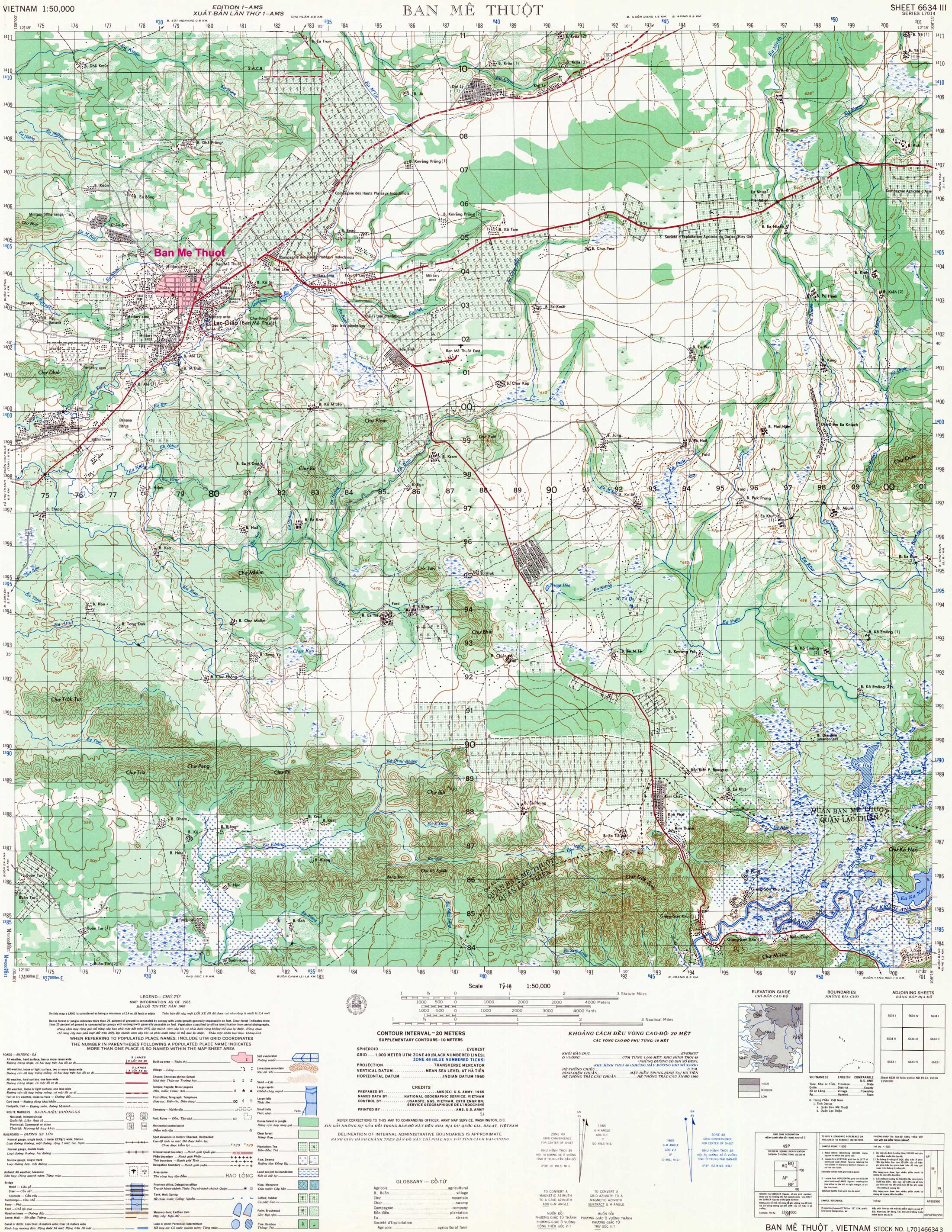
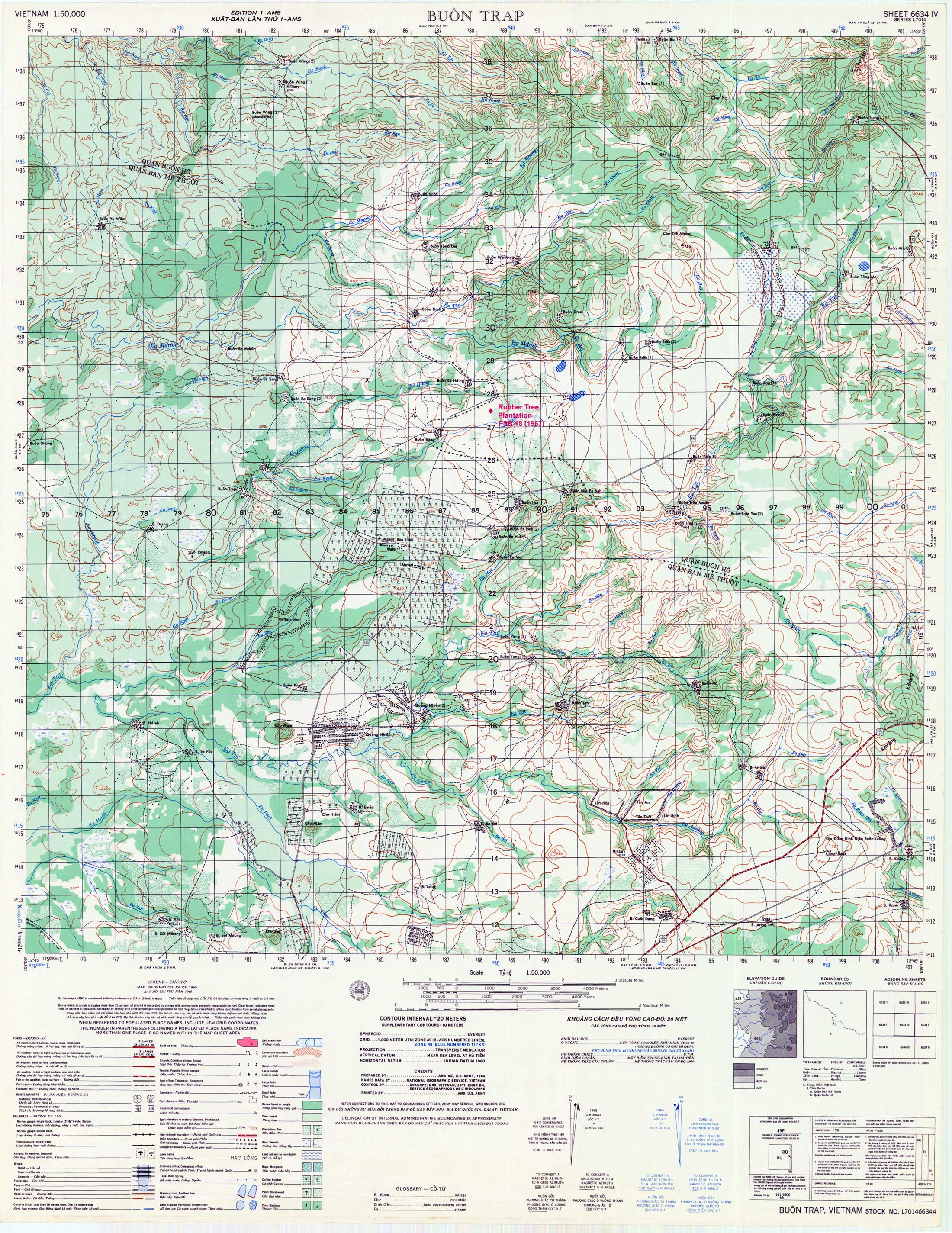
21 October (Saturday): The battalion moves the fire support base to its 17th location about 60-to-75 miles south of Cheo Reo to Ban Me Thuot, (MAP 6634-3) to the MeWal Rubber Plantation (Birch, Dilkes:164).
22 October (Sunday): The 119th Assault Helicopter Company supports the battalion twice this day. The first lift takes place in the morning when12 sorties move 60 troops. The second takes place at 1530 when they lift Charlie Company with 12 sorties into a four-ship LZ. The aircraft report taking enemy fire, but sustain no hits (119th Aviation Logs).
23 October (Monday): While on patrol in a rubber plantation, Alpha Company finds an abandoned village that contains punji pits and has North Vietnamese propaganda slogans in glish painted on the walls (Dilkes:164).
31 October (Monday): Delta Company is on patrol in the Ban Me Thout area. (Map 6634-4) After selecting a night position, the company sends out its OPs and an ambush patrol. En route to its ambush position, the patrol encounters an NVA unit that is setting up its mortars. In the ensuing fire fight between the patrol and the NVA, Specialist Fourth Class Kenneth Tappe Jr. is killed and one man is wounded. It isn’t until several hours later that the company’s 1st Platoon is able to recover the patrol and get its wounded medivaced. Specialist Tappe’s body isn’t recovered until the next morning. Later in the night the NVA unit attack the company perimeter, but are driven back with artillery and air support (Puff). Sweeps the next morning reveal 22 KIAs, numerous blood trails, and the tremendous destruction caused by the supporting artillery fire. Recovered materials included small-arms ammunition, rockets, grenades and a mortar stand with its base plate and sight (the tube isn’t found) (Beckman:1, Firman:1).
NOVEMBER 1967
1 November (Wednesday): The battalion moves the fire support base to its 18th location at coordinate AQ 814376 (Map 6634-4) near Cheo Reo in preparation for the upcoming operation, while the battalion trains relocates to Ban Blech. Alpha Company goes OPCON to the 1st Battalion, 8th Infantry. Charlie Company 1st Battalion, 22nd Infantry; two CIDG companies; and one regional force company from Quang Nheiu, Darlac Province are OPCON to the battalion. The CIDG companies are from Ban Blech and Van Don. The battalion continues to move companies throughout the day in an effort to locate and destroy elements of the 33rd North Vietnamese Army Regiment known to be in the area. Alpha Company kills one North Vietnamese soldier and captures another who was exfiltrating from the area, while Delta Company is attacked and kills 4 NVA. In a sweep of the area, Delta locates an abandoned NVA camp and recovers 43 packs that contained rice, clothing, explosives, rockets, grenades, medals, diaries, knives, a unit flag, and mortar parts. In addition to the normal direct support artillery, Bravo Battery, 4th Battalion, 42nd Artillery; and Bravo and Charlie Batteries, 5th Battalion, 16th Artillery are positioned to support the battalion and are protected by elements thereof (Birch, Firman:1, Schneider:16).
2 November (Thursday): After analyzing the tactical situation from the previous day’s activities, Delta Company advises battalion that they think the NVA are moving toward a nearby fire support base (Firman:1)
3 November (Friday): The CIDG company from Ban Blech surprises five North Vietnamese/Viet Cong at coordinate AQ 898403, (Map 6635-3) and the battalion’s Recon Platoon discovers a rice cache of over 3,000 pounds. Later that evening at 2155, the fire support base containing Charlie Company, 1st Battalion, 22nd Infantry and Charlie Battery, 16th Artillery is mortared and then is subjected to a ground attack. Simultaneously the battalion’s fire support base is also mortared. This attack results in six wounded-in-action, one of whom is Specialist Sixth Class Thomas Bardis of Headquarters & Headquarters Company. Known enemy losses for the day are 37 killed-in-action (Birch, Firman:1, GO 453: 01-21-68 Schneider:16).
4 November (Saturday): Captain Joseph K. Witkowski replaces Captain Joe W. Green as the Charlie Company commanding officer, and the 4th Division publishes the first issue of the Ivy Leaves in Vietnam (Francis Marion AAR; Schneider:8). 1SG Robert Lovelace, age 37, of Alpha Company dies of a heart attack (Arnold KIA records).
5 November (Sunday): The 3rd Platoon of Delta Company conducts an ambush early in the evening along a high-speed trail they had discovered earlier in the day and kills two North Vietnamese soldiers. Later that night the 2nd Platoon of Charlie Company also executes an ambush. Like Delta Company, they kill two North Vietnamese, but unlike the earlier ambush, this one alerts the rest of Charlie Company that are about to be attacked by a ground assault. Several incoming rounds of 82mm mortar fire alert Charlie Company’s mortars as to the direction of the attack. Their counter battery fire breaks up the ground assault before it can get under way (Bender, Dilkes:166, Hymoff:127-128).
7 November (Tuesday): The battalion fire support base near Bon Wing is mortared; 17 are wounded; and Specialist Fourth Class Donald Campbell of Bravo Company is killed (Birch, Dilkes KIA records, Firman:1).
9 November (Thursday): First Lieutenant Charles H. Bracket II replaces Captain Warren S. Morimoto as the Headquarters Company commanding officer. That night the battalion fire support base is attacked and receives 30 rounds of 82mm mortar fire. This action results in 10 wounded-in-action (Dilkes:167, Schneider:8 and 16).
10 November (Friday): The battalion fire support base is displaced and co-located with one of the 5/16 self-propelled artillery batteries at coordinate AQ 885275. This is the 19th move of the year (Birch, Schneider:16).
12 November (Sunday): Captain Lance L. Willermood replaces Captain James O. Davoli as the battalion’s S-2 officer (Schneider:7).
14 November (Tuesday): Delta Company rotates into the fire support base with Bravo Company, while Charlie Company moves out to begin patrols. Delta Company then encounters two enemy reconnaissance parties and inflicts two killed-in-action. Later in the evening the battalion’s fire support base receives 40 rounds of mortar fire, resulting in 20 wounded-in-action and one killed-in-action, Specialist Fourth Class Richard D. Klug of Bravo Company (Birch, Dilkes:167, Schneider:16, Firman:1).
15 November (Wednesday): First Lieutenant James L. King replaces Captain Joseph K. Witkowski as the battalion’s S-5 officer (Schneider:7).
18 November (Saturday): Delta Company kills two NVA (Birch).
19 November (Sunday): Captain Bruce R. Black replaces Captain Robert L. Sheldon as the battalion’s S-4 officer. The Recon Platoon is inserted into a patrol area near the Oasis for a two-week operation, and Brigade contacts battalion and asks how many helicopters it will take to move the battalion to Ban Me Thout (Easterly:71, Phillips:7, Schneider:7).
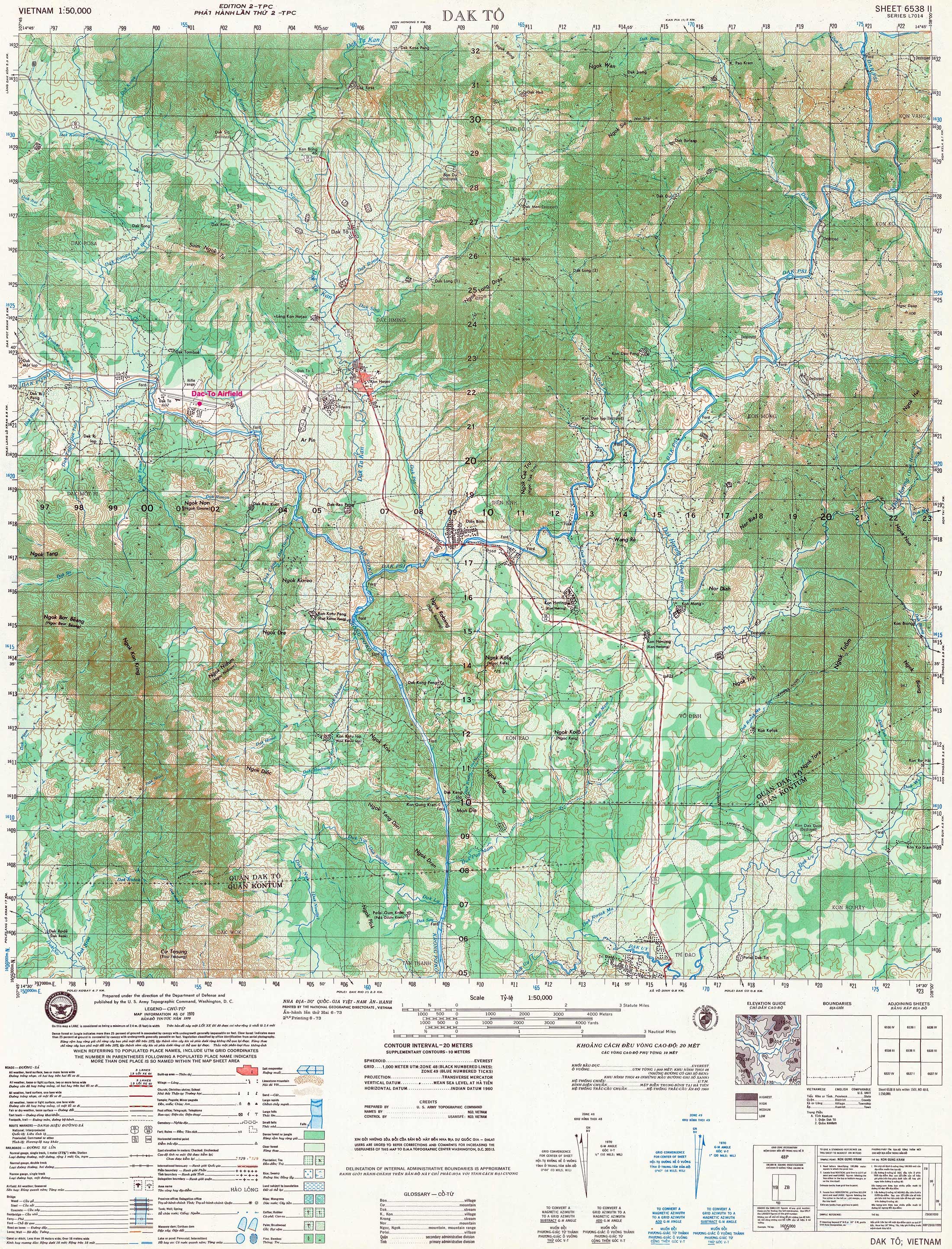
20 November (Monday): The battalion moves by Air Force aircraft (C-130 Caribous) from Ban Me Thout to Dak-To. (Map 6538-2) Upon arrival Alpha and Delta Companies are attached to the 173rd Airborne Brigade as Task Force Long for Operation MacArthur, while the remainder of battalion occupies a portion of the perimeter at the Dak To airfield and conducts local patrolling. Task Force Long, commanded by the battalion’s executive officer, Major George Long, then moves by motor convoy to the 173rd’s forward operations base, which has been designated as Fire Base 12, and closes by 1845. Shortly after the battalion is established at the airfield (its 20th move), the battalion trains is relocated and sets up its forward operations there also (Dilkes:169-170, Phillips:7, Schneider:17 and 20).
21 November (Tuesday): The battalion receives a mortar attack on its portion of the airfield perimeter. PFC Wayne Shumway, a medic with Alpha Company, is wounded (Phillips:7, Schneider:17). Captain Cousins becomes the commanding officer of Alpha Company (Dilkes:170, Schneider:8).
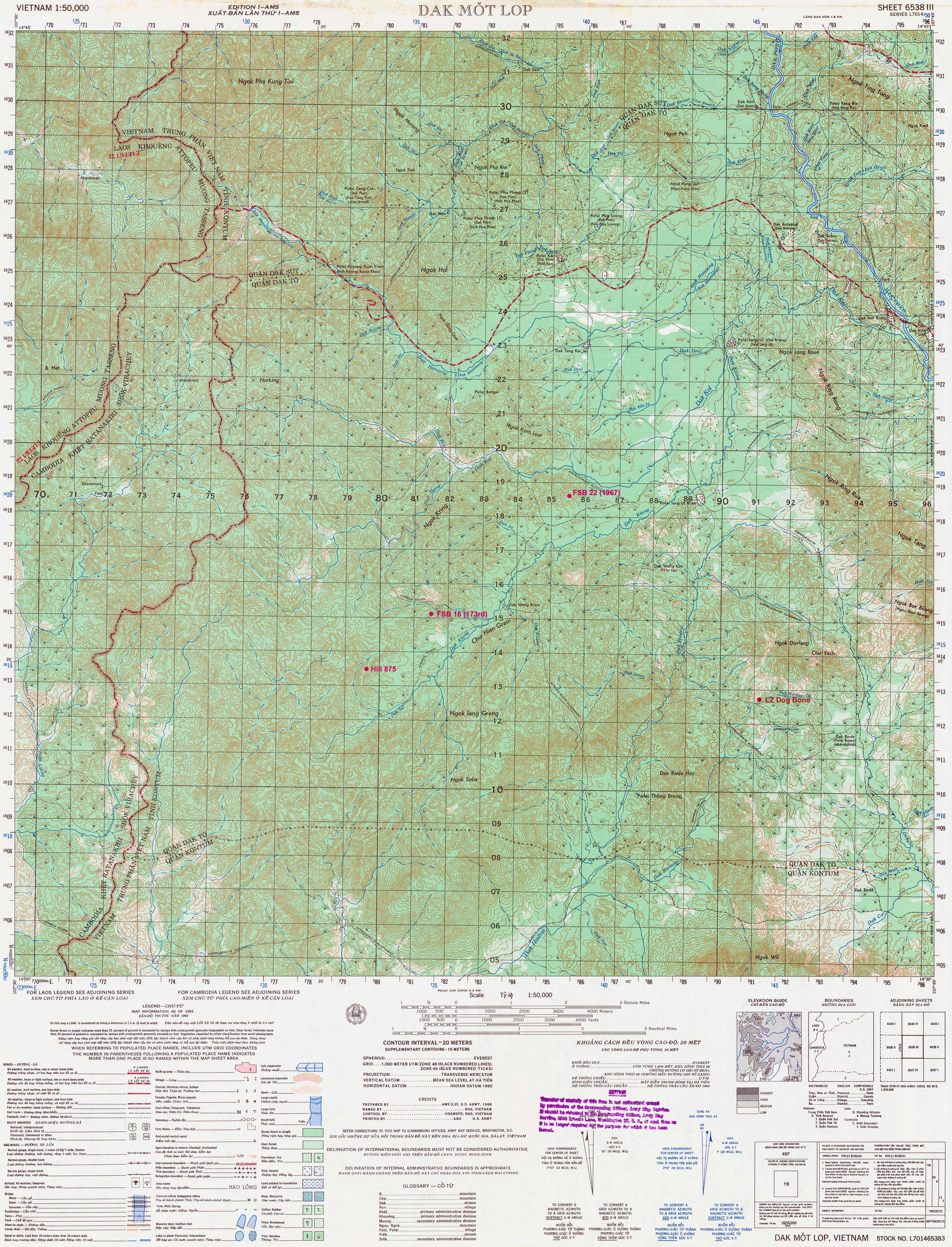
22 November (Wednesday): The entire battalion is placed OPCON to the 173rd Airborne Brigade. Task Force Long is then air-assaulted into a landing zone southeast of Hill 875. (Map 6538-3) The force suffers three casualties from ground fire. Once on the ground, the task force assumes control of a Mike Force company that is already there (they had walked in the night before to construct the landing zone). From the landing zone the task force then moves out about 500 meters to the north to establish a patrol base. This reconnaissance in-force reveals that there is little or no defense of the southern slope of Hill 875. The remainder of the battalion then moves by road to Ben Hett Special Forces camp where they are incorporated into the camp’s defenses. Task Force Long (minus the Mike Force, which is left behind to secure a downed helicopter) is directed to begin moving toward the summit of Hill 875. After moving only about 50-to-75 meters, the lead element, Delta Company, is hit by rocket fire from two helicopters. Total wounded casualties from this incident include Sergeants Flagg and Ed Heslin; Specialists Fourth Class Terry Putman, Dave Kraft and Hines; Private First Class Pat Engles; and two men from 2nd Platoon. After taking care of the wounded, movement again begins uphill, following a North Vietnamese resupply trail. Delta Company, still the lead element, soon discovers a bunker complex containing over 30 structures. While searching the bunkers, an explosion wounds five more members of Delta Company’s first platoon. Alpha Company is then directed to return to the patrol base and begin setting up for the night. At 1700 this order is rescinded, and Alpha Company is brought forward to re-join with Delta Company. Later in the night the patrol base that was vacated by Alpha Company is heavily mortared (Dilkes:172-174, Firman:2, Murphy:314, Phillips:7, Schneider:17).
23 November (Thursday): Charlie Company is air assaulted to the south slope of Hill 875 (Map 6538-3) where it links-up with the task force and is mortared. At about 1000 Delta Company launches its attack from the southeast in coordination with the 173rd on the northeast side of the hill. The combined assault is preceded by an air strike using high explosives, napalm, and 20mm cannon fire. At around 1130, Delta Company links up with the 173rd at the summit of Hill 875 and secures the southern half of the hill. Delta Company sustains two wounded during the assault, Specialist Fourth Class John Beckman of 2nd Platoon and Sergeant Deas of 1st Platoon. In consolidating the battalion’s position, Charlie Company stays in the landing zone, Alpha Company is left on a small knoll south of the summit, and Delta Company spends the night on the hill top (Dilkes:175-176, Firman:2, GO 453: 01-21-68, Murphy:324, Phillips:8, Schneider:17).
24 November (Friday): The battalion relieves the 4th Battalion, 503rd Airborne in-place and prepares to defend Hill 875, YB 797136. (MAP 6538-3) Alpha Company joins Delta Company at the hill’s summit, and Charlie Company moves up and occupies the patrol base on the knoll vacated by Alpha Company. At 1720 the North Vietnamese simultaneously mortar all three companies of the task force (Alpha Company takes about 10 rounds). Only two friendly wounded-in-action are sustained as a result of this attack. Enemy losses are unknown. While Task Force Long is busy with Hill 875, Bravo Company constructs a fire support base nearby, the 21st re-location (Dilkes:176-177, Schneider:17; Firman:2). Captain Charles T. Swanson replaces Captain David A. Dluzyn as the Bravo Company commanding officer (Schneider:8).
25 November (Saturday): The Recon Platoon is air lifted onto Hill 875 and links up with Charlie Company. Later in the day the battalion returns to the control of the 1st Brigade, 4th Infantry Division (Dilkes:176-178, Murphy:326, Schneider:17).
26 November (Sunday): The 3rd Platoon of Alpha Company captures one North Vietnamese soldier from the 174th Regiment who had dug himself out of a collapsed bunker on the hill. At 1744 the battalion’s fire support base and all its elements on Hill 875 are subjected to a heavy mortar attack. The fire support base and Bravo Company receive 12 rounds of 120mm mortar fire, while Alpha and Delta Companies receive 150 rounds of 120mm mortar fire. Total friendly casualties are five killed-in-action (First Lieutenant Charles Pitts and Specialist Fourth Class Dale Berthaouxfrom Alpha Company; Private First Class Edward Higgins of Bravo Company; and Private First Class James Hickeyfrom Delta Company) and 18 wounded-in-action, one of whom is Specialist Fourth Class Rick Firman of Delta Company. The wounded from Alpha Company include Staff Sergeant Roberts; Sergeants Rich Stamper, Tedesko, Signorille, Frye, Jim Cudeck, and William Fisher; and Specialist Fifth Class Wayne Shumway, an HHC medic attached to Alpha Company. The attack ends at 1828. Mortar, artillery, and Air Force flare ships are employed in a counter battery role. The incoming mortar rounds ignite a fire which threatens to destroy the fire support base until it is brought under control at 2300 (Dilkes: 178-180, Firman:3, Schneider:18).
27 November (Monday): Private First Class Terrier Cadovich of Delta Company is wounded (GO 453: 01/21/68).
29 November (Wednesday): The battalion’s fire support base is displaced for the 22nd time to coordinate YB 855186 (Map 6538-3) with the companies moving to adjacent terrain features around Hill 875. Sergeant Rich Stamper dies of wounds received on the 26th (Arnold KIA records, Birch, Dilkes:181, Schneider:18).
DECEMBER 1967
3 December (Sunday): Captain Ted G. Morgan replaces Captain Charles T. Swanson as the Bravo Company commanding officer (Schneider:8).
6 December (Wednesday): Specialist Fourth Class Terrance Sund of Bravo Company is suffocated while attempting to tunnel down to an unexploded aerial bomb (Arnold KIA records).
10 December (Sunday): The battalion consolidates all its elements on the Dak To airfield (Dilkes:185, Schneider:18).
11 December (Monday): The battalion is moved by ground transport to coordinate ZA 107684 (Map 6537-2) and establishes its 23rd and final fire support base for the year in the vicinity of Special Forces camp near Plei Djereng. They also return to the command and control of the 2nd Brigade, 4th Infantry Division. Operations in the new area include cordon-and-search of the villages. When the battalion departs the airfield, the battalion trains relocates back to the battalion’s base camp at Camp Enari (Dilkes:185, Schneider:18 and 20).
12 December (Tuesday): Specialist Fourth Class Arthur E. Clark of Alpha Company is wounded (GO #2297).
15 December (Friday): Captain Charles T. Swanson replaces First Lieutenant Charles H. Bracken II as the Headquarters Company commanding officer (Schneider:8).
18 December (Monday): Leaving a stay-behind-patrol at their recently departed patrol base, Delta Company ambushes and kills a two-man NVA recon team (Bender, Birch, Dilkes:185, Schneider:18).
22 December (Friday): An unidentified congressman visits the battalion fire support base (Birch).
24 December (Sunday): General Harold K. Johnson visits the battalion fire support base with a holiday message (Schneider:18).
25 December (Monday): Christmas is celebrated as well as is possible in the battalion’s fire support base with the HHC First Sergeant dressed up like Santa Claus, and General Harold K. Johnson visits the fire support base (Birch, Easterly:72, Schneider:18).
26 December (Tuesday): The 4th Division sponsors a Bob Hope show at Camp Enari in the afternoon for the soldiers (Dilkes:186).
28 December (Thursday): The company commanders of Delta and Echo Companies have supper with the local CIDG commander, Captain Bao (Birch)
26-31 December: There is no significant enemy action during the remainder of the year (Schneider:18).
This diary is still being compiled. This diary is still being compiled. Please Contact Del Willenbecher on how to send copies of any reports, documents, orders, manuscripts, letters, recollections, or pictures. or email Del Having Been Led by Love of Country
|
||
| ap |